Commercial Valley Gutter Cleaning and Lining
Blocked internal valley gutters and rusted metal box gutters are the single biggest cause of warehouse and factory flooding in the UK. Because they sit hidden between roof slopes or behind parapet walls, you rarely notice a problem until water is pouring onto your stock, machinery, or electrics below.
At a Glance: What Facility & Property Managers Need to Know
Bi-Annual Silt Clearance
Best booked twice a year—late autumn after the leaves drop, and late spring. Most industrial units can be cleared and inspected in 1 to 2 days without disrupting warehouse operations below.
Seamless Gutter Lining
When galvanised steel, cast iron, or asbestos cement gutters corrode at the joints, patching with mastic doesn't last. Seamless liquid-applied polyurethane or EPDM linings seal the entire trough for 15–25 years.
Safe Roof Access
Walking near fragile roof lights and valley drops requires strict HSE compliance. We use existing Latchways/mansafe lines, mobile scissor lifts (IPAF), or temporary freestanding edge protection.
Why Internal Valley Gutters Flood Commercial Buildings
On a standard house, if a plastic gutter blocks up, rainwater simply spills over the front edge onto the garden path. On a commercial warehouse, retail unit, or factory with a multi-span ("sawtooth" or twin-pitched) roof, the valley gutter sits directly over the middle of the building floor.
Because the sides of an internal valley gutter or boundary wall box gutter are tucked underneath the metal cladding sheets, water has nowhere to escape externally when a downpipe outlet blocks. Once silt, moss washed off the roof sheets, dead pigeons, and wind-blown warehouse packaging choke the outlets, the gutter rapidly fills during a heavy summer downpour. Water then backs up over the metal lips of the gutter tray and pours straight inside the building.
The second major culprit is standing water sitting in the tray year-round. Mud and wet decaying leaves trap moisture against bare galvanised steel or older cast-iron sections. Over time, this eats through the protective zinc coating, rusting out the bolted joints and corroding holes right through the sole of the gutter.
Step 1: Planned Bi-Annual Silt Clearance & Inspection
Commercial property insurers increasingly ask for proof of regular gutter maintenance before paying out on storm water damage claims. We carry out scheduled commercial gutter cleaning across Reading, Oxfordshire, Tadley, Basingstoke, and the surrounding business parks twice a year.
What happens on the day:
- 1 Manual de-silting & bagging: We never wash heavy mud and silt down your rainwater pipes—that just shifts the blockage underground into your storm drains. Our operatives shovel and scrape all heavy sludge, moss, and debris by hand into heavy-duty rubble sacks and lower them safely off the roof.
- 2 Outlet, weir & syphonic unblocking: We clear all leaf guards, wire balloons, and syphonic drainage baffles, checking that rainwater flows freely down every internal and external downpipe.
- 3 Joint & substrate inspection: Once the metal or fibre-cement trough is clean and dry, we check every bolted lap joint, stop-end, and outlet collar for rust perforation, split seals, or standing water caused by structural sag.
- 4 Before & after photo report: Because you can't see up into the valley yourself, we take date-stamped photographs before and after cleaning so you have a clear record for your lease compliance or building insurance file.
Step 2: Seamless Gutter Lining Systems (Fixing Leaking Box Gutters)
If your metal valley gutter is already leaking through dozens of corroded bolted joints, sending someone up with a tube of silicone or a tin of emergency roof repair compound is a waste of money. Metal gutters expand and contract considerably between frosty mornings and hot summer afternoons. Basic mastics tear open within a single season.
Stripping out an internal valley gutter completely means lifting the bottom edges of both adjoining roofs, hiring internal safety netting, and shutting down the warehouse floor beneath. Instead, we refurbish the existing gutter in situ using a continuous, flexible lining system.
Liquid-Applied Polyurethane Linings
Ideal for complex box gutters with awkward corners, multiple rainwater outlets, changes in depth, or step-downs.
- • Wire-brushed, degreased, and primed metal substrate
- • Glass-fibre reinforcement mat embedded into wet resin
- • Cures into a tough, seamless, elastomeric membrane
- • Moves naturally with thermal expansion of steel sheets
Continuous EPDM & Single-Ply Liners
Best suited to long, straight industrial valley runs where the underlying steel or concrete structure has heavy corrosion or cracking.
- • Fitted in long, vulcanised rubber or PVC rolls
- • Mechanically fixed under the roof sheet drip edges
- • Sealed around outlets with bespoke compression collars
- • Completely isolates water from the rusted gutter sole
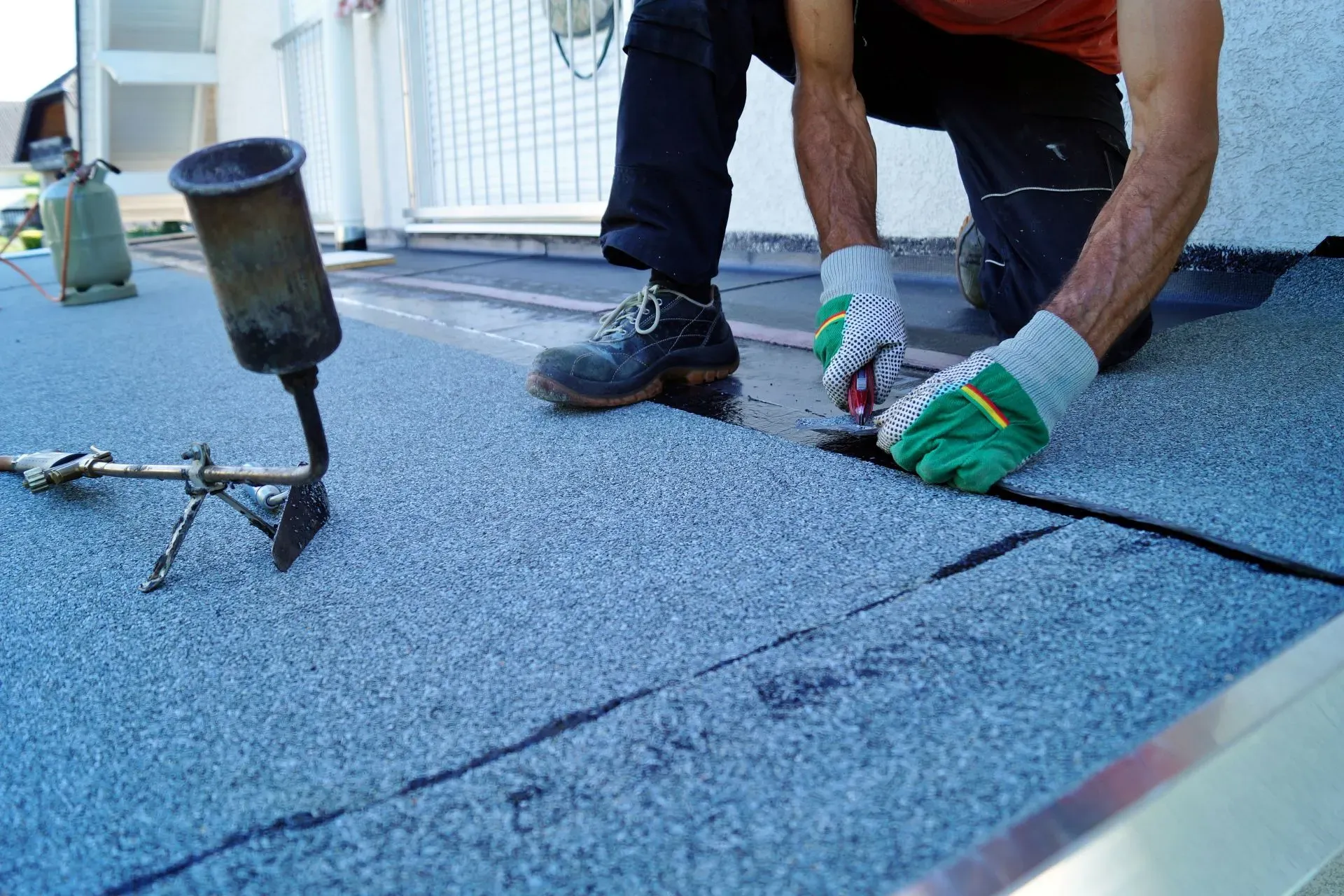
How We Prepare & Line a Corroded Valley Gutter
Any gutter lining is only as good as the preparation underneath it. Before a single drop of primer goes down, our team thoroughly cleans the metal, grinds back flaking rust, and plates over any structural holes using galvanised steel sections bonded and riveted into place.
We then prime the metal and apply a reinforced, cold-applied liquid waterproofing system—tucking the termination edge high up under the roof cladding sheets and dressing it right down inside the rainwater outlet throats. Because it is cold-applied with rollers and brushes, there is no naked flame ("hot works") required, keeping your building insurance risk down and allowing your staff to carry on working safely below.
Safe Roof Access: Edge Protection, Mansafe Systems & HSE Compliance
Working in a commercial valley gutter is high-risk work. Most industrial roofs built between the 1960s and early 2000s contain GRP translucent roof lights (skylights) running right alongside the gutter trough. Over time, UV light turns these panels brittle and moss disguises them so they look identical to the surrounding metal or fibre-cement sheets.
Under the Health and Safety Executive (HSE) Work at Height Regulations, no contractor should ever step onto an industrial roof without proper fall arrest or edge protection. As SafeContractor, CHAS, and NFRC-accredited roofers with IPAF-trained operatives, we assess access properly before quoting:
- Existing Mansafe & Latchways Systems: If your building has permanent horizontal lifeline cables installed, our CSCS-certified team uses full harnesses and restraint lanyards clipped to tested anchor points.
- Fragile Roof Light Covers & Staging: Where valley gutters run adjacent to unguarded skylights, we deploy temporary mesh skylight covers and lightweight Valley-Walk staging frames to spread loads safely.
- Temporary Edge Protection & MEWPs: For boundary box gutters and gable ends without parapet walls, we access the gutter via scissor lifts/boom lifts (cherry pickers) or install freestanding weighted handrail protection at the eaves.
- Full RAMS Provided: Before we set foot on your premises, we supply site-specific Risk Assessments and Method Statements (RAMS), along with proof of our £5m public liability insurance for your health and safety file.
Common Questions About Commercial Gutter Cleaning & Lining
Can you line an old asbestos cement commercial gutter?
Yes. Many older factories and warehouses across Reading, Newbury, and Oxfordshire still have fibre-cement or asbestos-cement valley gutters. You must never pressure-wash or grind asbestos gutters. Instead, we carefully hand-clean the wet silt, treat any residual moss with biocide, and encapsulate the gutter using a high-build primer and flexible liquid membrane or rubber liner—sealing the surface safely without disturbing the fibres.
Will our warehouse have to close while you clean or line the gutters?
No. Because all the work takes place externally from the roof level (or from a mobile access platform outside the building perimeter), your warehouse staff, forklift operations, and production lines can run as normal. We coordinate with your site manager on arrival to cordone off any external ground-level loading areas where we lower debris bags.
How long does a liquid-applied gutter lining last?
Depending on the system specification you choose, commercial polyurethane and hybrid polymer gutter linings carry manufacturer material warranties of 10, 15, or 20+ years, backed by our own 10-year workmanship guarantee. Once cured, they can easily be walked on during routine bi-annual silt cleaning.
What about dilapidations at the end of a commercial lease?
Corroded and blocked valley gutters are one of the most expensive items flagged up on a landlord's Schedule of Dilapidations when a tenant vacates a commercial unit. Having the gutters professionally cleaned and lined before your lease ends is far cheaper than paying the landlord's inflated claim for full gutter replacement later.
Related Services & Guides
Commercial Roofing in Reading
Expert commercial roofing in Reading and Oxfordshire. NFRC-accredited with 25+ years of experience. Get a free quote for industrial or flat roof solutions.
Do You Need Building Regs for a New Roof?
Find out when UK Building Regulations apply to a new roof, including the 25% rule, Part L insulation upgrades, and how NFRC roofers self-certify your work.
What to Do When Your Roof Leaks in Heavy Rain
Discover safe, practical steps to contain a sudden roof leak during heavy rain, protect your electrics, and get your home ready for an emergency roofer.
Wooden Fascias: Cap Over or Full Replacement?
Should you cap over old wooden fascias with uPVC or pay for a full replacement? Learn why capping over rotting timber can damage your roof rafters.
How Long Does an EPDM Rubber Roof Last?
Find out why a seamless, single-sheet EPDM rubber roof easily lasts 40 to 50 years with hardly any maintenance compared to traditional torch-on felt.
Do You Need a Roof Survey Before Buying a House?
Standard RICS surveys often only check roofs with binoculars. Learn how a proper roofer's inspection spots hidden rot and helps you renegotiate the price.
Dry Ridge and Verge Systems vs Mortar Bedding
Compare dry-fix ridge and verge systems with traditional mortar bedding. Learn about BS 8612 standards, loft ventilation, and stopping wind uplift.
Real Lead Flashing vs Lead-Free Alternatives
Compare traditional rolled lead sheet with synthetic lead-free flashing. Learn about lifespans, costs, and which option suits your chimney stack best.
Why Do Some Fibreglass Roofs Crack or Pinhole?
Find out why cheap GRP flat roofs blister or crack. Learn how dry OSB3 decking, expansion joints and proper resin mixing ensure a watertight finish.
Open-Cell vs Closed-Cell Spray Foam Removal
Learn the difference between soft open-cell and rigid closed-cell spray foam, and how we remove both safely without damaging your roof timbers.
Why Pressure Washing Roof Tiles Causes Leaks
Learn why jet washing roof tiles strips their protective surface, cracks mortar, and floods your loft, plus how manual scraping safely clears moss.
Roofing Scams and Doorstep Traders to Avoid
Learn how to spot common UK doorstep roofing scams. Check our homeowner guide on 14-day cooling-off periods, NFRC accreditation, and itemised quotes.
Why Chimney Back Gutters and Secret Valleys Leak
Find out why hidden chimney back gutters and secret valleys cause ceiling damp patches, even when your roof tiles look completely intact.
Protect Your Warehouse From Gutter Flooding
Get a straightforward quote for bi-annual commercial gutter cleaning or seamless box gutter lining from Trustmark Roofing. Over 25 years of experience across Reading, Oxfordshire, and the South of England.