Why Do Some Fibreglass Roofs Crack or Pinhole?
A properly laid GRP (Glass Reinforced Plastic) flat roof should easily last 25 to 30 years without a single leak. When a fibreglass roof cracks, blisters, or develops tiny pinholes within a few years of installation, it is almost never the material's fault—it comes down to corners cut on the timber deck, rushing the weather, or poor catalyst mixing on the day.
The Quick Answer for Homeowners:
90% of fibreglass roof failures happen because the installer laid resin directly over old roof felt, damp boards, or cheap standard chipboard instead of fresh 18mm OSB3 tongue-and-groove decking. Pinholes happen when the glass matting isn't rolled properly with a paddle roller to push out trapped air, or when the topcoat is applied too thinly. Small local damage can often be sanded back and patched in half a day, while widespread delamination across the whole roof means stripping back to the joists and starting again.
1. Laying Resin Over Wet Timber or the Wrong Boards
Polyester roofing resin hates moisture. Before a single drop of resin is mixed, the timber deck underneath must be bone dry—below 18% moisture content when checked with a proper two-pin moisture meter. If a roofer turns up after a frosty morning in Reading or a damp autumn morning in Oxfordshire and starts glassing over slightly damp boards, that trapped moisture has nowhere to go.
As soon as the sun comes out and heats the dark grey fibreglass surface, the trapped water turns to vapour, expands, and pushes the laminate away from the wood. That is what causes hollow-sounding blisters and peeling sheets of topcoat.
Just as bad is using the wrong sheet material. You can never lay GRP over old bitumen felt, standard builders' plywood, or interior chipboard. The glue in standard plywood and chipboard reacts with styrene in the resin and stops it bonding. A proper GRP system must go onto brand-new 18mm OSB3 sterling board with tongue-and-groove (T&G) edges, fixed down with ring-shank nails or decking screws so the joints cannot bounce up and down when someone walks on the roof.
What Good Deck Preparation Looks Like on Site
- ✓ Full strip-back: Old felt, chippings, and rotten boards are stripped right back to the joists so we can check the timber firrings and falls before boarding.
- ✓ Staggered OSB3 T&G joints: Boards are laid in a staggered brickwork pattern with joints taped or bandaged using 75mm chopped strand mat (CSM) before the main laminate goes down.
- ✓ Pre-formed GRP edge trims: All drip edges, raised kerbs, and wall fillets are fixed and bandaged first so water runs straight into the guttering without wicking back under the boards.
2. Why Pinholes Appear in Fibreglass Flat Roofs
If you climb up to inspect a leaking garage or extension roof and spot tiny craters or needle-sized holes across the grey topcoat, you are looking at pinholing. Left alone, rainwater sits in those tiny pits, freezes in winter, and slowly splits the resin layer open.
Pinholes happen during the wet lay-up stage for three main reasons:
- Skipping the paddle roller: When saturating 450g or 600g chopped strand fibreglass matting with resin, you cannot just roll it on with a fluffy paint roller and walk away. You have to work the wet mat thoroughly with a metalribbed consolidation roller (a paddle roller) to break down the binder in the glass fibres and drive out every microscopic air bubble.
- Starving the mat of resin: Trying to stretch a 20kg drum of resin too far leaves dry white patches of glass fibre poking up. When the coloured topcoat is rolled over those protruding fibres, tiny air pockets form around the bristles and pop as it cures, leaving pinholes behind.
- Laying in blazing midday sun: On a hot summer day, dark roof boards heat up fast. Air inside the timber expands and blows tiny bubbles up through the wet resin before it can gel. Experienced roofers shade the deck or lay resin early in the morning before the sun hits the roof.
3. Loud Banging Noises and Cracking on Large Roofs
Have you ever heard a fibreglass roof make a loud "crack" or "bang" on a hot afternoon or a freezing night? GRP cures into a very rigid, hard shell. On a standard garage, bay window, or dormer roof under 30 square metres, normal thermal expansion is handled easily by a gap left around the perimeter trims.
However, if an installer lays one continuous sheet of fibreglass across a huge kitchen extension without leaving a 10mm–15mm expansion gap around the walls, or forgets to install flexible expansion joints on larger spans, the roof is locked tight. When the temperature swings from -4°C in January to 30°C in July, the timber and fibreglass move at slightly different rates. Because the rigid GRP can't slide, the stress builds up until it snaps along a board joint or rips the drip trims clean off the fascia.
4. Bad Catalyst Mixing ("Hot Mixes" vs Under-Cured Resin)
Fibreglass resin cures through a chemical reaction triggered by a liquid hardener (catalyst), which has to be measured accurately at 1% to 4% depending on the outside temperature.
When someone tips catalyst straight out of the bottle by eye instead of using a graduated measuring dispenser, two things go wrong. Pour in too much catalyst (a "hot mix") to beat incoming rain, and the resin gets scorching hot in the bucket, shrinks aggressively, and turns as brittle as glass—meaning it will spider-crack within its first winter. Put in too little catalyst on a cold day in Tadley or Basingstoke, and the roof stays tacky for weeks, washing white streaks down your brickwork the first time it rains.
Can a Cracked or Pinholed GRP Roof Be Repaired?
That is the one big upside of fibreglass: if the timber deck underneath is still dry and solid, you do not need a full replacement.
We can grind back isolated cracks or pinholed areas with a 40-grit sanding disc, wipe the surface down with pure acetone to remove grease and dirt, laminate a fresh layer of 450g matting over the split, and seal it with UV-stable topcoat. The new resin chemically bonds into the old layer, making it watertight again within a couple of hours.
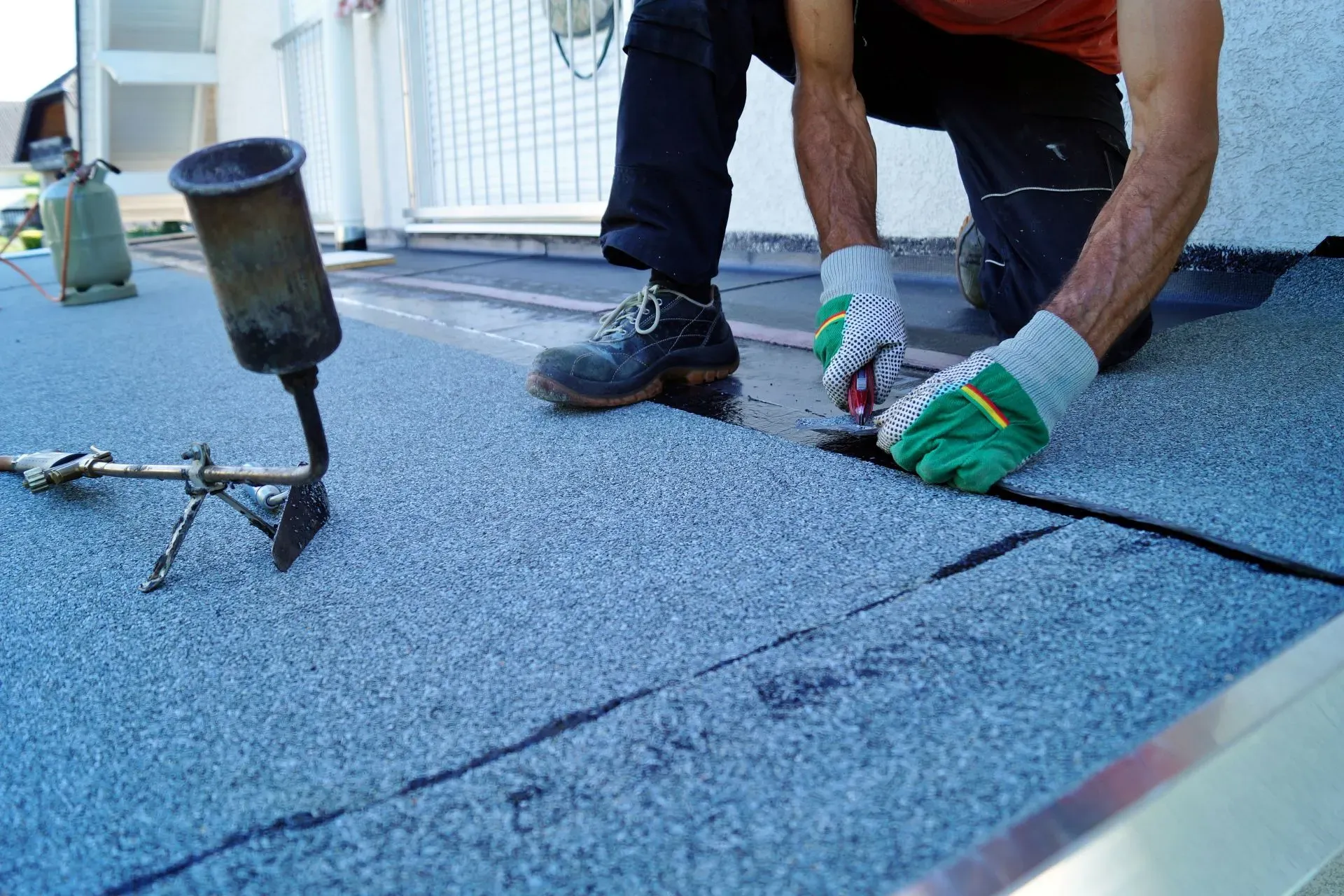
Proper flat roof preparation and attention to detail at the edges stops leaks before they start.
Repair vs Full Strip and Re-Deck: How to Tell Which You Need
| What You See on the Roof | Likely Cause | Honest Fix |
|---|---|---|
| Pinholes or thin, chalky grey patches (deck feels solid underfoot) | Topcoat rolled too thinly or poor paddle rolling during installation. | Sand down the whole surface, clean with acetone, and apply a fresh heavy coat of fire-retardant topcoat (usually 1 day's work). |
| Single split along a board line or around a skylight | Missed joint bandage or slight thermal movement at a weak point. | Grind back 150mm either side of the crack, re-bandage with chopped strand mat and resin, then re-topcoat. |
| Spongy boards, large water-filled blisters, or peeling sheets across the roof | Laid over old felt, wet plywood, or standard chipboard that has now rotted. | Patching won't hold. Strip back to joists, upgrade insulation if required, board with 18mm OSB3 T&G, and lay a new system. |
Building Regulations When Replacing a Failed Flat Roof
If you are just sanding and over-coating a localised crack, you don't need council paperwork. However, if more than 50% of a flat roof above a heated room (like a kitchen extension, bedroom, or home office) has to be stripped back to the joists because the boards are rotten, Building Regulations Part L kicks in.
That means you are legally required to upgrade the thermal insulation to current U-value standards—typically converting it into a warm roof with rigid PIR insulation boards—unless it is an unheated detached garage or porch. As an NFRC and TrustMark accredited contractor, we advise you upfront on whether your roof needs building control sign-off and handle the specification properly so you aren't caught out when you come to sell your house.
Common Questions About Fibreglass Roof Problems
Can you put fibreglass straight over an old fibreglass roof?
Yes, provided the OSB3 timber deck underneath is still completely dry and solid when walked on. We grind back the old glossy topcoat to expose clean laminate, wipe it down with acetone, and bond a brand-new layer of fibreglass matting and topcoat directly on top. If the boards underneath are soggy or bouncy, over-boarding or coating over the top is a waste of money.
Is EPDM rubber better than GRP fibreglass for avoiding cracks?
Both are brilliant materials when fitted in the right place. GRP is tough, seamless, great for awkward shapes with lots of skylights or pipes, and handles foot traffic well. For very large, open rectangular roofs (over 40m²) that get direct south-facing sun all day, a one-piece EPDM rubber membrane can sometimes be a smarter choice because rubber stretches naturally without needing expansion joints.
Why is my fibreglass roof turning green or holding puddles?
Shallow puddles (standing water) happen when the timber firring strips under the deck weren't set to at least a 1:40 fall towards the gutter. Unlike old bitumen felt, standing water won't actually rot a properly cured GRP roof, though it will leave a harmless ring of green algae when it dries. You can wash algae off gently with a soft brush and mild patio cleaner—just avoid blasting a damaged or pinholed roof at close range with a heavy-duty pressure washer.
Related Services & Further Reading
Explore our flat roofing services or read more practical advice from our roofing team.
Fibreglass Grp Roofing in Reading
Expert GRP fibreglass roofing in Reading and Oxfordshire. 25+ years experience, 10-year guarantee and 0% finance options. Get your free quote now.
Do You Need Building Regs for a New Roof?
Find out when UK Building Regulations apply to a new roof, including the 25% rule, Part L insulation upgrades, and how NFRC roofers self-certify your work.
What to Do When Your Roof Leaks in Heavy Rain
Discover safe, practical steps to contain a sudden roof leak during heavy rain, protect your electrics, and get your home ready for an emergency roofer.
Wooden Fascias: Cap Over or Full Replacement?
Should you cap over old wooden fascias with uPVC or pay for a full replacement? Learn why capping over rotting timber can damage your roof rafters.
How Long Does an EPDM Rubber Roof Last?
Find out why a seamless, single-sheet EPDM rubber roof easily lasts 40 to 50 years with hardly any maintenance compared to traditional torch-on felt.
Do You Need a Roof Survey Before Buying a House?
Standard RICS surveys often only check roofs with binoculars. Learn how a proper roofer's inspection spots hidden rot and helps you renegotiate the price.
Dry Ridge and Verge Systems vs Mortar Bedding
Compare dry-fix ridge and verge systems with traditional mortar bedding. Learn about BS 8612 standards, loft ventilation, and stopping wind uplift.
Real Lead Flashing vs Lead-Free Alternatives
Compare traditional rolled lead sheet with synthetic lead-free flashing. Learn about lifespans, costs, and which option suits your chimney stack best.
Commercial Valley Gutter Cleaning and Lining
Learn why blocked or rusted valley gutters cause warehouse floods, and how planned silt clearance and seamless linings stop leaks.
Open-Cell vs Closed-Cell Spray Foam Removal
Learn the difference between soft open-cell and rigid closed-cell spray foam, and how we remove both safely without damaging your roof timbers.
Why Pressure Washing Roof Tiles Causes Leaks
Learn why jet washing roof tiles strips their protective surface, cracks mortar, and floods your loft, plus how manual scraping safely clears moss.
Roofing Scams and Doorstep Traders to Avoid
Learn how to spot common UK doorstep roofing scams. Check our homeowner guide on 14-day cooling-off periods, NFRC accreditation, and itemised quotes.
Why Chimney Back Gutters and Secret Valleys Leak
Find out why hidden chimney back gutters and secret valleys cause ceiling damp patches, even when your roof tiles look completely intact.
Need Straightforward Advice on Your Flat Roof?
Speak directly to our experienced team in Tadley, Reading, and Oxfordshire. We offer free roof inspections, clear written quotes, and a 10-year workmanship guarantee on all new GRP roofs.