Wooden Fascias: Cap Over or Full Replacement?
If you have had a few quotes to replace your old timber roofline, you have probably been offered two very different prices: one to "cap over" the existing wood with thin uPVC, and another to strip everything off and fit solid new boards. Here is the honest truth about how both methods work, and which one actually saves you money in the long run.
The Short Answer From a Working Roofer
In almost every case on a British home, a full replacement is the right choice. Capping over fixes a thin 9mm plastic cover directly onto your old wooden fascia boards. If that timber is already damp, soft, or starting to rot behind the paint, sealing it inside plastic traps the moisture. Within a few years, the wood turns to sponge, the rot spreads into your structural roof rafters, and the weight of winter rainwater pulls the gutters and plastic capping straight off the wall.
What Is the Difference Between Capping and Full Replacement?
Your fascia board is the long horizontal band running right under the edge of your roof tiles. It does two heavy jobs: it supports the bottom row of tiles, and it carries all the weight of your guttering. When rain pours down or snow slides off the roof and sits in the gutter, your fascia takes the strain.
Capping (or cladding) leaves your old wooden fascia boards in place. A fitter simply takes down the gutters, nails or glues a thin L-shaped 9mm uPVC cover board over the front of the old wood, and screws the gutters back through the plastic into the old timber underneath.
Full replacement means doing the job properly from the rafters out. We push back the bottom two rows of roof tiles, strip away every scrap of old timber fascia and soffit board, inspect the exposed wooden rafter feet for rot, and fix thick 18mm – 22mm solid uPVC fascia boards directly onto the sound roof structure using stainless steel polytop pins.
Why Capping Over Rotting Timber Causes Expensive Roof Damage
Homeowners usually look into new fascias because the old wooden ones are flaking, splitting at the corners, or showing dark wet patches where the gutter brackets have worked loose. By that point, water has already got behind the paintwork.
We get called out across Reading, Coley, and Oxfordshire every winter to repair rooflines that were capped over five or six years earlier. When we pull the loose plastic cover back, we almost always find the same three problems:
1. Sweating and Accelerated Wet Rot
Wood needs to breathe to dry out. When you trap damp timber behind an airtight sheet of uPVC and seal the edges with silicone, moisture cannot escape. As the sun heats the plastic during the day, the damp wood sweats inside its plastic shell, turning solid timber into wet mulch in half the normal time.
2. Rot Spreading Into Your Roof Rafters
Your wooden fascia board is nailed directly against the ends of your structural roof rafters (the rafter feet). If fungal decay is left festering inside a capped board, it travels straight into those rafter ends. Instead of a straightforward fascia job, you end up paying a carpenter or roofer to splice new timber into your roof frame.
3. Gutters Pulling Away in Heavy Rain
A 9mm capping board is too thin to hold gutter screws by itself; it relies entirely on the wooden board behind it for grip. Once the hidden timber rots, the screws lose their bite. The first heavy downpour or snowfall fills the gutter, and the whole run sags forward or crashes down onto the patio.
What Happens at the Eaves During a Full Replacement?
When you strip the old boards right back, you get the chance to sort out the bottom edge of your roof properly. On almost every older house we work on in towns like Henley-on-Thames, Abingdon, Didcot, and Wokingham, the original bitumastic sarking felt tucked into the gutter has rotted away from decades of UV light and standing water.
Because a cap-over job never lifts the bottom row of roof tiles, that perished felt is left untouched, allowing rainwater to drip straight behind the fascia and into the soffit box. During a full replacement, we fit a proper 3-part eaves protection system:
- • Rigid Eaves Support Trays (Felt Trays): We slide durable plastic trays under the bottom layer of roofing felt so water runs cleanly into the centre of the gutter instead of pooling behind the board.
- • Over-Fascia Ventilation: Modern lofts hold thick layers of insulation, which means the roof space needs steady airflow to stop winter condensation forming on the underside of the felt. We fit hidden ventilation strips along the top of the new fascia board (or vented soffits) that meet current UK Building Regulations without letting draughts into your rooms below.
- • Bird Comb Fillers: If you have profiled or curved concrete tiles, sparrows and starlings love nesting in the gaps along the eaves. We fit toothed comb guards that let air flow freely while keeping birds, wasps, and mice out of your loft.
Side-by-Side Comparison: Capping vs Full Strip & Replace
| Feature | 9mm Cap-Over Board | 18mm Full Replacement |
|---|---|---|
| Old Timber Removed? | No – left trapped behind plastic | Yes – stripped back to bare rafters |
| Rafter Feet Inspected? | No – hidden from view | Yes – checked and repaired if needed |
| Rotten Eaves Felt Fixed? | Rarely – tiles are not lifted | Yes – new eaves trays fitted under felt |
| Loft Ventilation Added? | Blocked by existing timber | Continuous over-fascia or soffit vents fitted |
| Expected Lifespan | 5 to 8 years before timber fails | 25+ years maintenance-free |
Is It Ever Okay to Cap Over Wooden Fascias?
To be completely fair, there is one situation where capping can work: if the existing timber is thick, 100% bone dry, completely free of rot, and well-ventilated behind, and the homeowner simply wants to stop climbing a ladder to paint it every three summers.
The catch? By the time we have erected safe access scaffolding, taken down the guttering, pushed back the bottom course of tiles to fit eaves trays, and checked the timber properly, the labour saving between capping and stripping off the wood completely is surprisingly small. For the sake of a relatively modest difference in material cost, stripping the old timber out removes the risk of hidden rot altogether.
What to Expect When We Replace Your Roofline
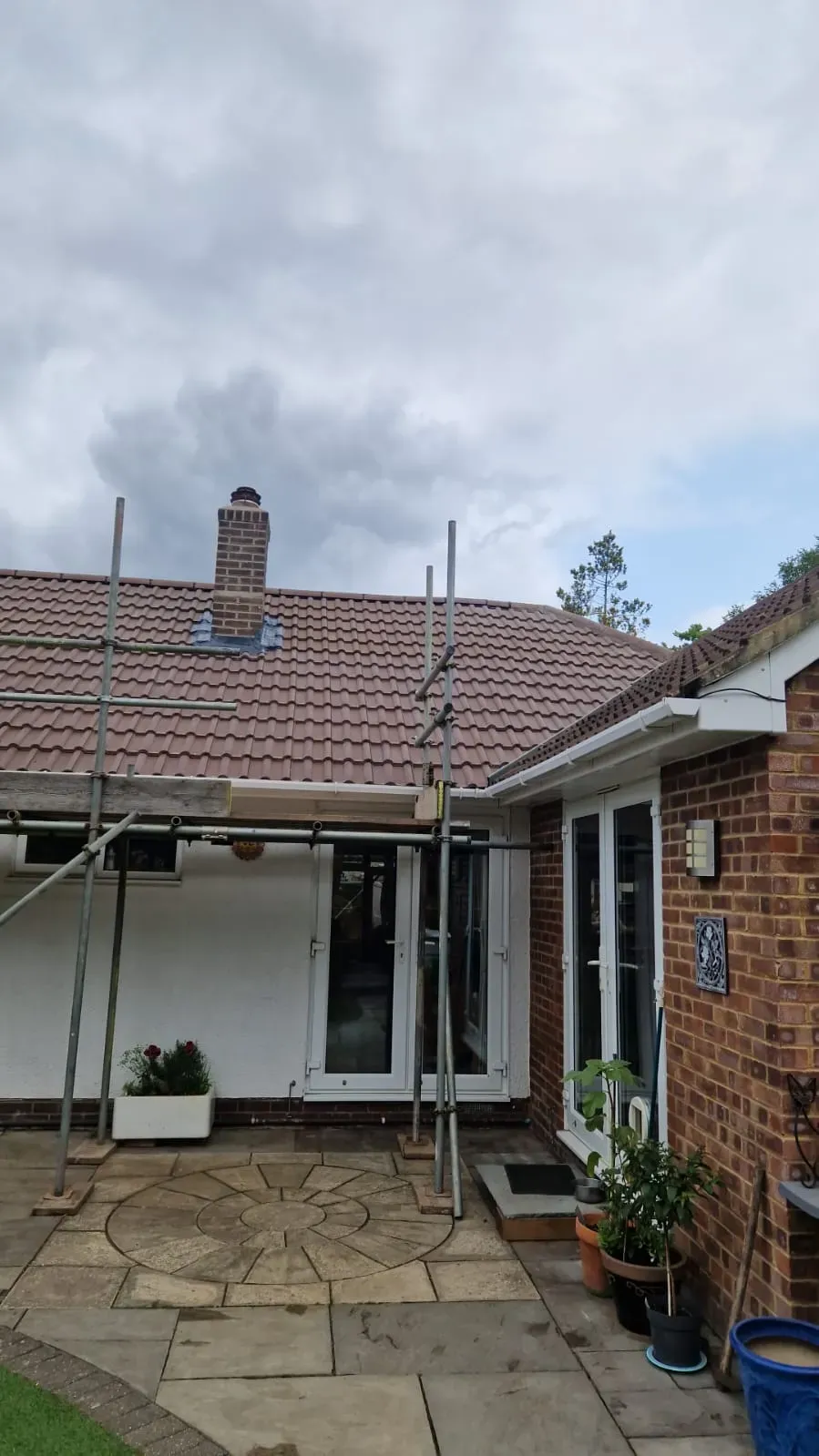
We never work off wobbling ladders to rip down heavy fascia boards. Following HSE safety standards, we set up proper access scaffolding or scaffold towers around the eaves so our City & Guilds qualified roofers can work safely with both hands and protect your conservatory, porch, or garden paths below.
We strip and replace the roofline in manageable sections so your home is never left open to the weather overnight. All old timber, broken felt, and rusty cast-iron or plastic gutters are loaded straight into our vans or waste skips, and we sweep down your driveway and patio before we hand over your 10-year workmanship guarantee.
Common Questions About Fascia Replacement
How can I tell if my fascias have already been capped over?
Look closely at the bottom lip of the fascia board from ground level or check the corners. Capped boards usually have a thin, slightly flexible profile with plastic joint trims glued over the corners, and the board will sit noticeably further forward beneath the roof tiles. If you tap it gently, a 9mm cap often sounds hollow where it has bowed away from the old wood behind.
What if my house has old asbestos soffit boards?
Many properties built or refurbished between the 1950s and early 1980s across Berkshire and Oxfordshire have grey cement-fibre soffit boards tucked under the fascias, which can contain chrysotile (white) asbestos. You should never drill or nail into these. We can safely inspect, test, and arrange licensed removal and disposal of old cement soffits during a full replacement.
Do I have to have bright white plastic fascias?
Not at all. While crisp white uPVC is still popular, we regularly install foiled woodgrain finishes including Anthracite Grey, Black Ash, Rosewood, Golden Oak, and Cream. If you live in a period cottage or conservation area around Henley, Wallingford, or Oxford, we can also cut, treat, and fit new kiln-dried timber fascias to match the original character of your street.
Unsure What Condition Your Timber Is In?
Book a free, no-obligation roofline inspection. We will get up close, check your existing fascias, soffits, and eaves felt, and give you a clear, honest quote for full replacement or repair.
- ✓ Over 25+ Years Roofing Experience
- ✓ 10-Year Workmanship Guarantee
- ✓ £5m Public Liability Insurance
- ✓ NFRC, TrustMark & CHAS Accredited
- ✓ 0% APR Finance Options Available
Related Services & Guides
Fascias Soffits And Guttering in Reading
High-quality fascias, soffits, and guttering in Reading. 25+ years experience, 10-year guarantees, and 0% finance. Protect your home with Trustmark Roofing.
Do You Need Building Regs for a New Roof?
Find out when UK Building Regulations apply to a new roof, including the 25% rule, Part L insulation upgrades, and how NFRC roofers self-certify your work.
What to Do When Your Roof Leaks in Heavy Rain
Discover safe, practical steps to contain a sudden roof leak during heavy rain, protect your electrics, and get your home ready for an emergency roofer.
How Long Does an EPDM Rubber Roof Last?
Find out why a seamless, single-sheet EPDM rubber roof easily lasts 40 to 50 years with hardly any maintenance compared to traditional torch-on felt.
Do You Need a Roof Survey Before Buying a House?
Standard RICS surveys often only check roofs with binoculars. Learn how a proper roofer's inspection spots hidden rot and helps you renegotiate the price.
Dry Ridge and Verge Systems vs Mortar Bedding
Compare dry-fix ridge and verge systems with traditional mortar bedding. Learn about BS 8612 standards, loft ventilation, and stopping wind uplift.
Real Lead Flashing vs Lead-Free Alternatives
Compare traditional rolled lead sheet with synthetic lead-free flashing. Learn about lifespans, costs, and which option suits your chimney stack best.
Commercial Valley Gutter Cleaning and Lining
Learn why blocked or rusted valley gutters cause warehouse floods, and how planned silt clearance and seamless linings stop leaks.
Why Do Some Fibreglass Roofs Crack or Pinhole?
Find out why cheap GRP flat roofs blister or crack. Learn how dry OSB3 decking, expansion joints and proper resin mixing ensure a watertight finish.
Open-Cell vs Closed-Cell Spray Foam Removal
Learn the difference between soft open-cell and rigid closed-cell spray foam, and how we remove both safely without damaging your roof timbers.
Why Pressure Washing Roof Tiles Causes Leaks
Learn why jet washing roof tiles strips their protective surface, cracks mortar, and floods your loft, plus how manual scraping safely clears moss.
Roofing Scams and Doorstep Traders to Avoid
Learn how to spot common UK doorstep roofing scams. Check our homeowner guide on 14-day cooling-off periods, NFRC accreditation, and itemised quotes.
Why Chimney Back Gutters and Secret Valleys Leak
Find out why hidden chimney back gutters and secret valleys cause ceiling damp patches, even when your roof tiles look completely intact.
Ready to Upgrade Your Roofline Properly?
From our base in Tadley, our team installs heavy-duty uPVC fascias, ventilated soffits, and deep-flow guttering across Reading, Coley, Oxfordshire, and the surrounding areas. Get in touch today for honest advice and a free fixed-price quote.