What to Do When Your Roof Leaks in Heavy Rain
Finding water dripping through your bedroom ceiling or running down an internal wall during a downpour is stressful. Before a roofer can safely get up there, here are the exact, practical steps you need to take inside your home right now to protect your electrics, stop your ceiling from collapsing, and keep the damage to a minimum.
Our emergency response crews cover Reading, Coley, Tadley, Oxfordshire, and the surrounding areas 24 hours a day.
Call 0118 230 3346 View our 24/7 Emergency Roof Repairs service →The 60-Second Emergency Checklist
If water is actively coming in right now, do these five things in order before you worry about anything else:
- Turn off the upstairs lighting circuit at your consumer unit (fuse box) if water is anywhere near a light fitting, switch, or smoke alarm.
- Move furniture, rugs, and electronics out of the splash zone, or cover heavy beds and wardrobes with plastic dust sheets or bin bags.
- Relieve any bulging ceiling plasterboard by poking a small drainage hole in the lowest point with a screwdriver over a bucket.
- Catch the drips quietly by pinning a piece of string to the leak or tilting a board inside your bucket so water runs down without splashing.
- Take quick photos and a 10-second video on your phone of the water coming in for your home insurance, then call an emergency roofer.
Step 1: Make Your Electrics Safe First
Water and mains electricity are a lethal combination. When rainwater enters your loft space, it runs along the timber joists and pools on the top side of your plasterboard ceilings. Because all the wiring for your upstairs ceiling roses, downlights, extractor fans, and mains-wired smoke alarms sits directly on top of that plasterboard, water will almost always find its way out through a light hole first.
Do not touch a wet light switch. Go straight to your consumer unit (fuse box) and flick off the breaker labelled Upstairs Lights (or the relevant floor). If water is running down a wall near plug sockets, switch off the Upstairs Sockets / Ring Main breaker too. Once the circuit is isolated, unscrew any lampshade bowl that is filling up with water so the weight does not rip the fitting out of the ceiling.
Step 2: How to Stop a Bulging Ceiling From Collapsing
Modern plasterboard and older lath-and-plaster ceilings act like a sponge until they reach saturation point. Sometimes, gloss or vinyl silk emulsion paint acts like a waterproof balloon skin. You might see a terrifying dome or blister forming in the ceiling paint, or notice a section of plasterboard bowing downwards between the joists.
A single litre of water weighs one kilogram. If twenty or thirty litres of rainwater pool above a single sheet of plasterboard, the board will suddenly give way, dumping filthy loft water, wet fibreglass insulation, and heavy wet plaster across your room.
The Screwdriver Trick (Controlled Drainage)
It feels wrong to deliberately poke a hole in your ceiling, but a neat 6mm hole takes five minutes to fill with Polyfilla once the roof is fixed, whereas a collapsed ceiling costs hundreds of pounds to re-board and skim.
- Place a wide bucket, washing-up bowl, or plastic storage tub on old towels directly underneath the bulge.
- Stand slightly to the side (not directly underneath) on a stable step, and push a long Phillips screwdriver orbradawl gently up through the lowest point of the sag.
- Let the trapped water drain steadily into the bucket. If the first hole clogs with wet insulation, make a second small hole a couple of inches away.
Step 3: Containing Water in the Room and Loft
When water drops two and a half metres from a ceiling into a bucket, it splashes outwards and soaks the surrounding carpet anyway. To stop the splashback, put an old towel at the bottom of the bucket to deaden the impact, or lean a wooden chopping board inside the bucket at an angle so the drip hits the board and slides quietly into the water.
Should you go into the loft? Only go up your loft hatch if the loft is safely boarded, you have a bright torch, and the ceiling below is completely solid. Never step onto ceiling joists or unboarded plasterboard—especially when wet—as your foot will go straight through into the bedroom below.
If you have safe, boarded access around the hatch, you can pull back the soggy loft insulation roll where the drip is landing and slide a plastic storage box or gardening trug underneath the leak inside the loft. Wet loft insulation holds gallons of water and keeps feeding the ceiling stain for days even after the rain stops, so lifting the wet fibreglass into a bin bag makes drying out much faster.
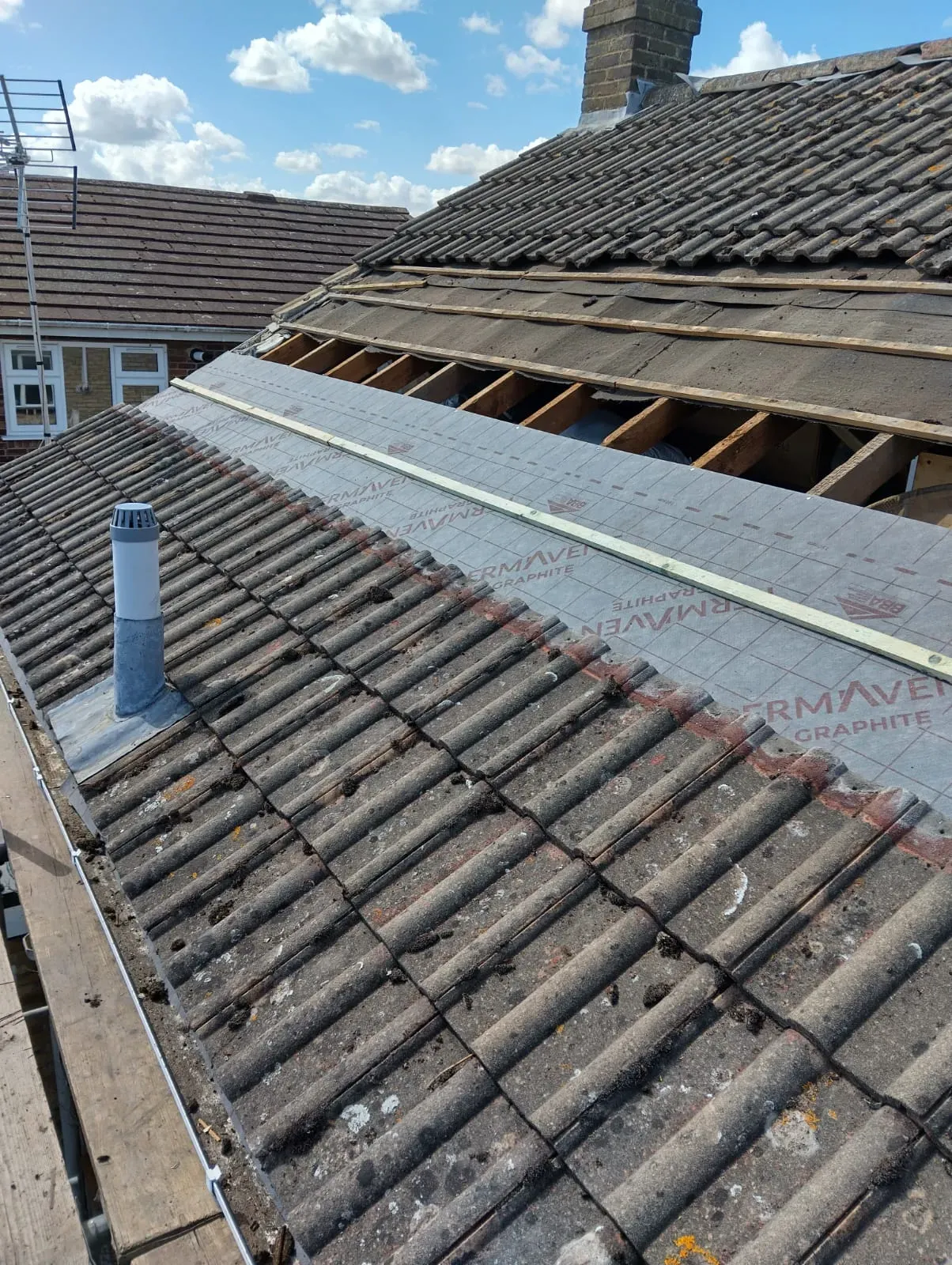
Why You Should Never Climb Onto a Wet Roof Yourself
We understand the temptation to get a ladder out and push a slipped tile back into place while it is raining. Please stay on the ground. Wet concrete tiles, natural slate, and leadwork are as slippery as sheet ice, and a sudden gust of wind catching a tarpaulin in your hands can pull you off a ladder in a split second.
Even professional roofers follow strict Health and Safety Executive (HSE) roof work guidelines during storms. Walking on wet tiles without proper roof ladders and weight distribution can also snap adjacent brittle tiles, turning a one-tile leak into five.
What Happens When Our Emergency Roofer Arrives?
Customers often ask us how we can fix a roof when it is pouring with rain. The honest answer is divide and conquer: we split emergency call-outs into an immediate weatherproof make-safe (or straight permanent repair if safe and dry enough) followed by any mortar or torch-on work once the surface dries.
Temporary Make-Safe & Rapid Fixes
If a couple of interlocking tiles or slates have slipped or cracked in accessible weather, we can often slot replacements straight in or secure them with lead tingles and clips on the first visit.
If high winds have stripped a ridge line, a tree branch has punctured the felt, or a flat roof has split in standing water, mortar and adhesives will not cure in a downpour. Instead, we install a heavy-duty reinforced emergency tarpaulin anchored securely with timber battens, or apply cold-liquid emergency waterproofing paste to stop water ingress immediately.
Permanent Weatherproof Repair
As soon as the wind drops and the roof surface is safe, we return to complete the permanent repair. That means stripping back the affected patch, splicing in new breathable roofing membrane (underlay), fitting treated timber battens, and matching your existing clay, concrete, or slate tiles.
Unlike temporary patch jobs, our permanent structural repairs carry our written 10-year workmanship guarantee.
Why Does My Roof Only Leak in Heavy or Sideways Rain?
It is surprisingly common for a roof to stay bone dry during normal drizzle, then suddenly pour water indoors during a heavy thunderstorm or when the wind blows from the south-west. Remember that where water drips through your ceiling is rarely right underneath the hole in the roof—water runs down the underside of the felt or rafters until it hits a nail, lap joint, or ceiling joist.
Here are the five culprits we find on 90% of heavy-rain call-outs across Berkshire, Hampshire, and Oxfordshire:
-
1.
Perished Underlay & Pooling (Nail Rot): Your outer tiles are designed to shed most of the rain, while the felt or breathable membrane underneath catches wind-blown spray. On older roofs, the traditional bitumen felt sags and rots around the timber battens, letting driven rain drip straight onto the ceiling plaster.
-
2.
Blocked Valley Gutters & Parapets: Where two pitched roof slopes meet in a 'V' shape (a valley), thousands of litres of water channel down a lead or fibreglass trough during a downpour. If moss, leaves, or a slipped tile dams the valley, the water overflows sideways over the lip of the lead and straight into the loft.
-
3.
Pulled or Split Chimney Lead Flashing: Brick chimneys expand and contract slightly in hot summers and freezing winters. If the lead step flashing or apron pulls out of the mortar joint by just 3mm, wind-driven rain hits the brickwork and pours straight down the chimney breast into the bedroom or fireplace below. (See our Chimney Repairs & Leadwork page).
-
4.
Cracked Tile Channels & Capillary Action: Over time, moss growth in the interlocking side channels of concrete tiles stops water draining downwards. Instead, the moss wicks water sideways under the overlap of the next tile.
-
5.
Flat Roof Blisters & Upstands: On extensions, dormers, and garages, old felt flat roofs often split where the flat surface turns up against the house brickwork (the upstand), or around soil vent pipes and skylights.
Documenting the Leak for Your Home Insurance
Before you mop up or throw away damaged items, spend two minutes gathering evidence in case you decide to claim under your buildings or contents insurance. Insurers make a strict distinction between sudden storm damage (usually covered) and gradual wear and tear (rarely covered).
- Take clear photos of the water dripping indoors, any stained ceilings, and any ruined carpets or furniture.
- From ground level or an upstairs window, photograph any visible missing tiles, fallen ridge mortar, or storm debris in the garden.
- Keep a note of the date and time the storm hit (insurers check Met Office wind speed and rainfall records for your postcode).
- Most policies require you to mitigate further loss—meaning you do not have to wait days for an insurance loss adjuster while water ruins your house. Paying an emergency roofer to tarp or make the roof watertight immediately is expected; just ask us for our itemised invoice and before-and-after roof photos to hand to your insurer.
Note on Building Regulations: Calling a roofer to fix a leak, replace broken tiles, or renew flashing does not require council approval. However, if an old roof is beyond economical repair and you end up stripping and replacing more than 25% of the total roof area, UK Building Regulations (Part L) require you to upgrade your loft thermal insulation at the same time. As NFRC-accredited contractors, we handle all compliance guidance and provide written guarantees.
Frequently Asked Questions
How much does an emergency roof leak call-out cost?
The cost depends on whether the leak can be fixed straight off a ladder (such as slotting in two or three slipped tiles or clearing a blocked valley) or requires heavy-duty storm tarping and tower access. We always explain our call-out and make-safe rates clearly over the phone before we set off, and provide a free, transparent quote for any permanent follow-up repairs.
Can you come out while it is still raining?
Yes. Our 24/7 emergency team will attend to assess the ingress, help contain the issue inside the loft if required, and carry out external tarping or tile realignment as soon as wind speeds and surface conditions allow safe ladder access.
How long does a wet ceiling take to dry out before I can repaint?
Once the roof is 100% watertight and any wet loft insulation above the stain has been lifted or replaced, plasterboard typically takes between 1 and 3 weeks to dry completely. Keep the room ventilated and heated gently. Before painting over a brown water stain, always apply a coat of stain-block primer, otherwise the yellowish tannin ring will bleed straight back through standard emulsion paint.
Could the water in my loft be condensation rather than a leak?
If you only find water droplets covering the whole underside of the roofing felt on freezing cold mornings—rather than one concentrated stream during heavy rain—it is often loft condensation caused by blocked eaves vents or a bathroom extractor hose venting into the loft. A localized drip during a downpour is almost always an external roof leak.
Need an Emergency Roofer Today?
Don't let a ceiling leak turn into ruined joists and electrics. Based in Tadley and operating across Reading, Coley, and all of Oxfordshire, our City & Guilds qualified roofers are on standby 24/7.
- ✓ 25+ Years Local Roofing Experience
- ✓ Emergency Tarping & Make-Safe
- ✓ 10-Year Workmanship Guarantee
- ✓ £5m Public Liability Insurance
- ✓ NFRC, TrustMark & CHAS Accredited
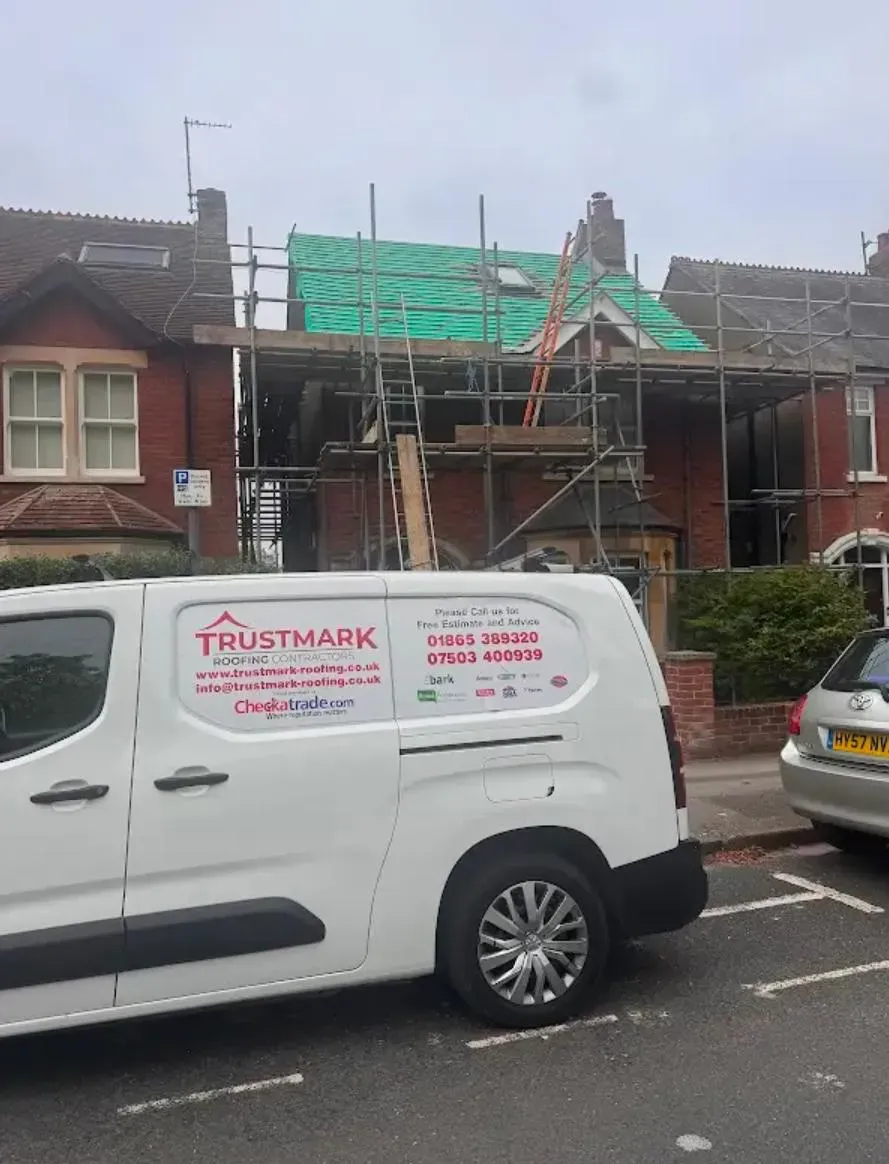
Rapid response vans stocked with tiles, slates, breathable membranes, lead flashing, and heavy-duty storm tarpaulins.
Related Services & Guides
Emergency Roof Repairs in Reading
Need fast emergency roof repairs in Reading? Trustmark Roofing offers 24/7 storm damage fixes and leak repairs with a 10-year guarantee. Call today!
Do You Need Building Regs for a New Roof?
Find out when UK Building Regulations apply to a new roof, including the 25% rule, Part L insulation upgrades, and how NFRC roofers self-certify your work.
Wooden Fascias: Cap Over or Full Replacement?
Should you cap over old wooden fascias with uPVC or pay for a full replacement? Learn why capping over rotting timber can damage your roof rafters.
How Long Does an EPDM Rubber Roof Last?
Find out why a seamless, single-sheet EPDM rubber roof easily lasts 40 to 50 years with hardly any maintenance compared to traditional torch-on felt.
Do You Need a Roof Survey Before Buying a House?
Standard RICS surveys often only check roofs with binoculars. Learn how a proper roofer's inspection spots hidden rot and helps you renegotiate the price.
Dry Ridge and Verge Systems vs Mortar Bedding
Compare dry-fix ridge and verge systems with traditional mortar bedding. Learn about BS 8612 standards, loft ventilation, and stopping wind uplift.
Real Lead Flashing vs Lead-Free Alternatives
Compare traditional rolled lead sheet with synthetic lead-free flashing. Learn about lifespans, costs, and which option suits your chimney stack best.
Commercial Valley Gutter Cleaning and Lining
Learn why blocked or rusted valley gutters cause warehouse floods, and how planned silt clearance and seamless linings stop leaks.
Why Do Some Fibreglass Roofs Crack or Pinhole?
Find out why cheap GRP flat roofs blister or crack. Learn how dry OSB3 decking, expansion joints and proper resin mixing ensure a watertight finish.
Open-Cell vs Closed-Cell Spray Foam Removal
Learn the difference between soft open-cell and rigid closed-cell spray foam, and how we remove both safely without damaging your roof timbers.
Why Pressure Washing Roof Tiles Causes Leaks
Learn why jet washing roof tiles strips their protective surface, cracks mortar, and floods your loft, plus how manual scraping safely clears moss.
Roofing Scams and Doorstep Traders to Avoid
Learn how to spot common UK doorstep roofing scams. Check our homeowner guide on 14-day cooling-off periods, NFRC accreditation, and itemised quotes.
Why Chimney Back Gutters and Secret Valleys Leak
Find out why hidden chimney back gutters and secret valleys cause ceiling damp patches, even when your roof tiles look completely intact.
Looking for permanent leak repairs or a roof health check?
Explore our dedicated Emergency Roof Repairs, Roof Leak Repair, and Storm Damage Roof Repair services, or browse all homeowner advice on our Roofing Guides hub.