Do You Need a Roof Survey Before Buying a House?
The short answer? Yes, if you want to avoid inheriting a £10,000+ re-roofing bill the week after you get the keys. A standard RICS homebuyer survey usually only looks at the roof from the pavement with a pair of binoculars—meaning hidden rot, perished felt, and failing flat roofs get missed until it rains.
At a Glance: Pre-Purchase Roof Inspections
How long it takes
Usually 1 to 2 hours on-site for a thorough ladder, loft, and high-level photographic check, with your written report and quote ready within 48 hours.
Why RICS isn't enough
General surveyors rarely climb ladders onto the roof. They often flag "further investigation required by a qualified roofing contractor" to cover their own liability.
How it saves you money
An itemised repair or replacement quote from an NFRC-registered roofer gives you hard evidence to renegotiate the house price before exchange of contracts.
Why a Standard Homebuyer Survey Misses Roof Problems
When you're buying a property in Reading, Oxfordshire, or anywhere across the South of England, you'll almost certainly pay for a RICS Level 2 (HomeBuyer Report) or Level 3 (Building Survey). Many buyers assume that means a surveyor has climbed up, checked the tiles, tested the leadwork, and poked at the timber battens.
In reality, general building surveyors have to cover the entire property in a couple of hours. Their insurance and health and safety policies usually limit them to inspecting the roof from ground level using binoculars, plus sticking their head through the loft hatch if it's easily accessible and boarded.
Because they can't get up close to hidden valley gutters, rear chimney backs, or flat extensions, they'll often write a standard disclaimer in your report recommending you get a specialist roofer to inspect the roof before you exchange contracts. That's usually the moment homebuyers pick up the phone to us at Trustmark Roofing.
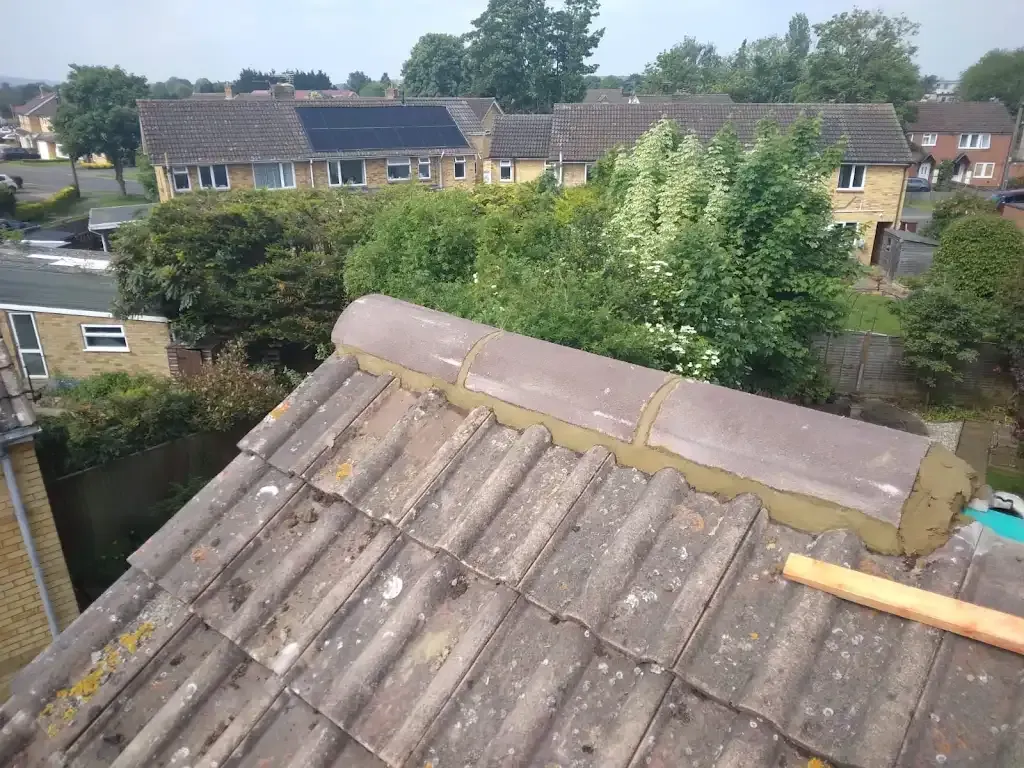
What a Roofer Spots That Binoculars Can't
With over 25 years on the tools, our City & Guilds qualified roofers know the exact weak points where water gets in and where sellers sometimes do a quick patch-up job before putting a house on the market. When we carry out a pre-purchase roof inspection, we look closely at:
- Rotten Eaves Felt and Battens: The bottom two courses of tiles right above the guttering take the brunt of the rain. Old bitumen sarking felt rots away at the eaves, dumping rainwater behind the fascia boards and rotting the rafter feet out of sight.
- Nail Sickness on Slate Roofs: A natural slate roof can look tidy on a dry day, but if the original iron nails have rusted through, those slates are only hanging on by friction. One winter gale and they'll start sliding into the street.
- Hidden Valley Gutters and Chimney Back-Gutters: You cannot see the back of a chimney stack or the bottom of a lead valley from the pavement. Split lead flashing, cracked mortar fillets, and blocked valleys are the number one cause of damp chimney breasts in bedrooms.
- Ageing Flat Roofs (Felt, GRP, or EPDM): Rear kitchen extensions, dormers, and garage roofs are impossible to judge from the ground. We check for pooling water, soft or spongy OSB decking underneath, blistering felt, and delaminating fibreglass edges.
- Spray Foam Insulation Inside the Loft: If the current owner has had spray foam applied directly to the underside of the roof tiles or felt, many UK mortgage lenders will refuse to lend on the property because it traps moisture against the rafters. We spot this immediately and can price up safe removal if needed.
What Happens on the Day of Our Roof Survey?
We keep the whole process straightforward so we don't hold up your house purchase. Once you give us the estate agent's details (or the seller's contact number), we can coordinate access directly so you don't have to take a day off work.
Our CSCS-certified and IPAF-trained roofers attend the property and carry out a methodical external and internal check:
1. External Roof & High-Level Check
We inspect the coverings (slate, clay, concrete tile, or flat membrane), ridge and hip beds, dry verge systems, lead flashings, chimney pots, flaunching, and guttering runs, taking clear close-up photos of any defects.
2. Internal Loft Space Inspection
Inside the roof void, we check the condition of the breathable membrane or traditional felt, look for daylight showing through slipped tiles, check purlins and rafters for sagging or damp staining, and verify loft ventilation and insulation thickness.
Afterwards, we send you a plain-English report backed up by date-stamped photographs. We split our findings into what needs sorting urgently to make the house watertight, what will need routine maintenance over the next 3 to 5 years, and an honest estimate of the roof's remaining lifespan.
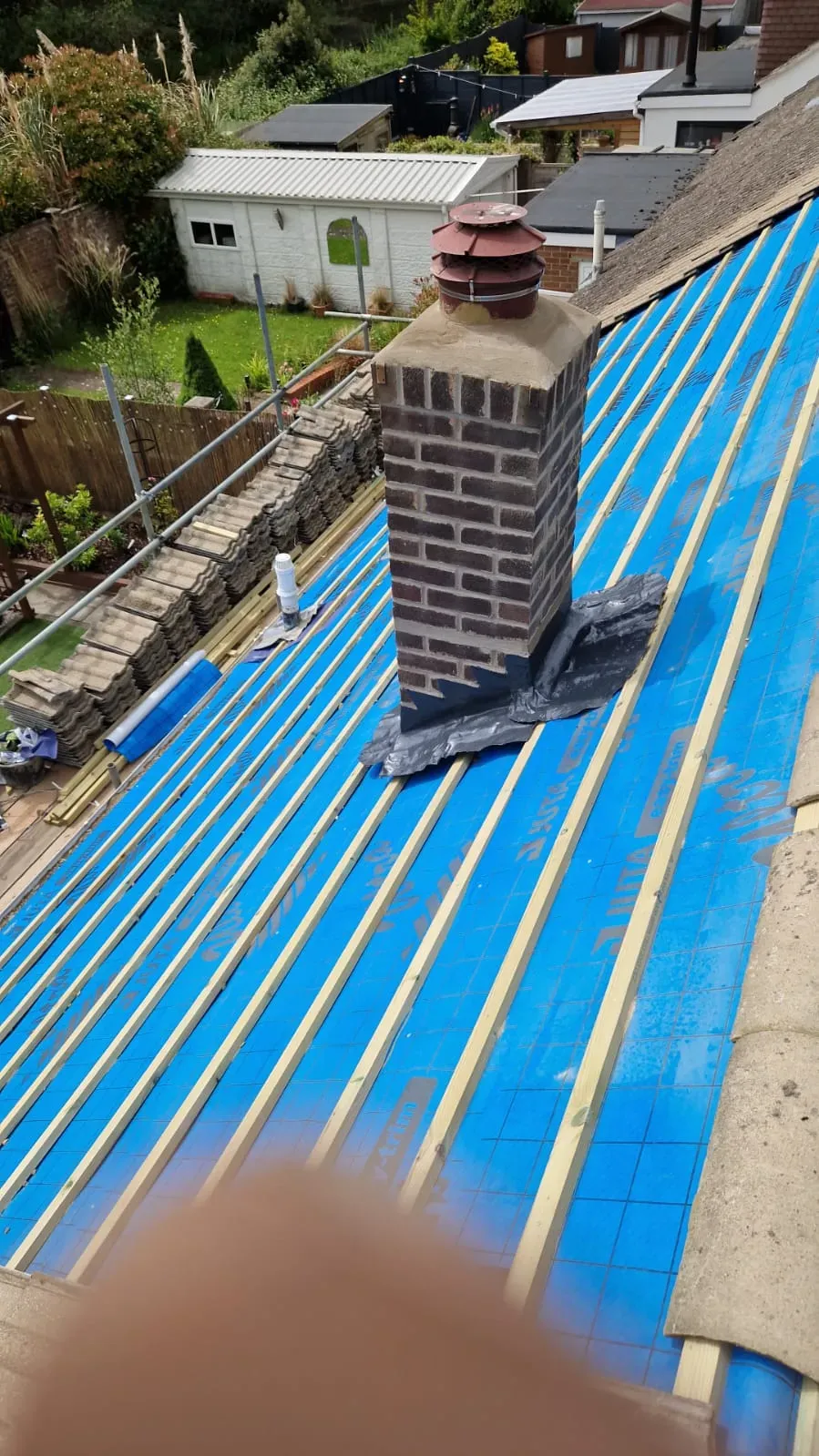
Using Your Roof Report to Renegotiate the House Price
One of the biggest advantages of getting a dedicated roofer out before exchange is financial leverage. If a general homebuyer report vaguely says "the roof is showing signs of age," a seller will usually shrug it off and refuse to drop the asking price.
However, if you hand the estate agent a photographic report from an NFRC and TrustMark-accredited roofing contractor showing rotten battens, split valley lead, and a fixed-price quotation for £2,500 of remedial work—or £12,000 for a full replacement—you have hard figures on the table.
In our experience across Reading, Coley, Tadley, and Oxfordshire, buyers regularly use our survey reports and itemised quotes to either get the seller to pay for the repairs before completion, or knock the cost of the roofing work straight off the purchase price.
Building Regulations & Paperwork to Ask the Seller For
If the seller claims the roof was recently replaced, ask their solicitor for the Building Regulations compliance certificate. Under UK law, if you strip and replace more than 25% of a roof's surface area, it requires Building Control sign-off (or self-certification through the NFRC Competent Person Scheme) and the loft insulation must be upgraded to meet Part L energy efficiency standards.
If a homeowner had a "cash-in-hand" re-roof done without Building Control approval, or if the house is in a local Conservation Area (common around Henley-on-Thames, Oxford, and Wallingford) and wrong materials were used, you could be liable when you eventually come to sell the property yourself. We check that any recent roofing work complies with current British Standards (BS 5534) so you aren't caught out.
Common Questions About Pre-Purchase Roof Surveys
When should you definitely book a specialist roof survey?
We strongly advise booking a dedicated roof inspection if the property is over 30 years old with its original roof, if it has flat roof extensions or hidden valley gutters, if you can see heavy moss buildup or uneven ridge lines from the street, or if your RICS surveyor has flagged red/amber warnings on the roof structure or chimney stacks.
Can you inspect a roof if the seller won't allow ladders against the gutters?
Almost all sellers are fine with safe ladder access when they know we hold £5m public liability insurance and are SafeContractor and CHAS accredited. Where access is tight, high, or fragile, we also use high-level inspection equipment and thorough internal loft checks to assess the structure safely without disturbing a single tile.
What if the survey finds work is needed—are we obligated to use you?
Not at all. We give honest, transparent advice and a clear written quote for any repairs or replacements needed. If you go ahead with buying the house and ask us to carry out the work, all our workmanship is backed by a 10-year guarantee, and we even offer 0% APR finance options to help spread the cost after your move.
Related Services & Further Reading
Helpful homeowner advice and specialist roofing services across Oxfordshire, Reading, and the South of England.
Roof Inspection And Surveys in Reading
Book a professional roof inspection in Reading with Trustmark Roofing. 25+ years experience, expert surveys, and detailed reports. Call 0118 230 3346.
Do You Need Building Regs for a New Roof?
Find out when UK Building Regulations apply to a new roof, including the 25% rule, Part L insulation upgrades, and how NFRC roofers self-certify your work.
What to Do When Your Roof Leaks in Heavy Rain
Discover safe, practical steps to contain a sudden roof leak during heavy rain, protect your electrics, and get your home ready for an emergency roofer.
Wooden Fascias: Cap Over or Full Replacement?
Should you cap over old wooden fascias with uPVC or pay for a full replacement? Learn why capping over rotting timber can damage your roof rafters.
How Long Does an EPDM Rubber Roof Last?
Find out why a seamless, single-sheet EPDM rubber roof easily lasts 40 to 50 years with hardly any maintenance compared to traditional torch-on felt.
Dry Ridge and Verge Systems vs Mortar Bedding
Compare dry-fix ridge and verge systems with traditional mortar bedding. Learn about BS 8612 standards, loft ventilation, and stopping wind uplift.
Real Lead Flashing vs Lead-Free Alternatives
Compare traditional rolled lead sheet with synthetic lead-free flashing. Learn about lifespans, costs, and which option suits your chimney stack best.
Commercial Valley Gutter Cleaning and Lining
Learn why blocked or rusted valley gutters cause warehouse floods, and how planned silt clearance and seamless linings stop leaks.
Why Do Some Fibreglass Roofs Crack or Pinhole?
Find out why cheap GRP flat roofs blister or crack. Learn how dry OSB3 decking, expansion joints and proper resin mixing ensure a watertight finish.
Open-Cell vs Closed-Cell Spray Foam Removal
Learn the difference between soft open-cell and rigid closed-cell spray foam, and how we remove both safely without damaging your roof timbers.
Why Pressure Washing Roof Tiles Causes Leaks
Learn why jet washing roof tiles strips their protective surface, cracks mortar, and floods your loft, plus how manual scraping safely clears moss.
Roofing Scams and Doorstep Traders to Avoid
Learn how to spot common UK doorstep roofing scams. Check our homeowner guide on 14-day cooling-off periods, NFRC accreditation, and itemised quotes.
Why Chimney Back Gutters and Secret Valleys Leak
Find out why hidden chimney back gutters and secret valleys cause ceiling damp patches, even when your roof tiles look completely intact.
Need an Honest Roof Report Before You Exchange Contracts?
Speak directly to our friendly team in Tadley, Reading, and Oxfordshire for fast turnaround surveys and itemised quotes.