What Exactly Is a Chimney Back Gutter?
Unless a chimney sits right at the very peak (the ridge) of your roof, rainwater running down the roof slope hits the back brickwork of the chimney stack. Without a proper drainage channel, that water would pool against the bricks and soak straight through into the loft.
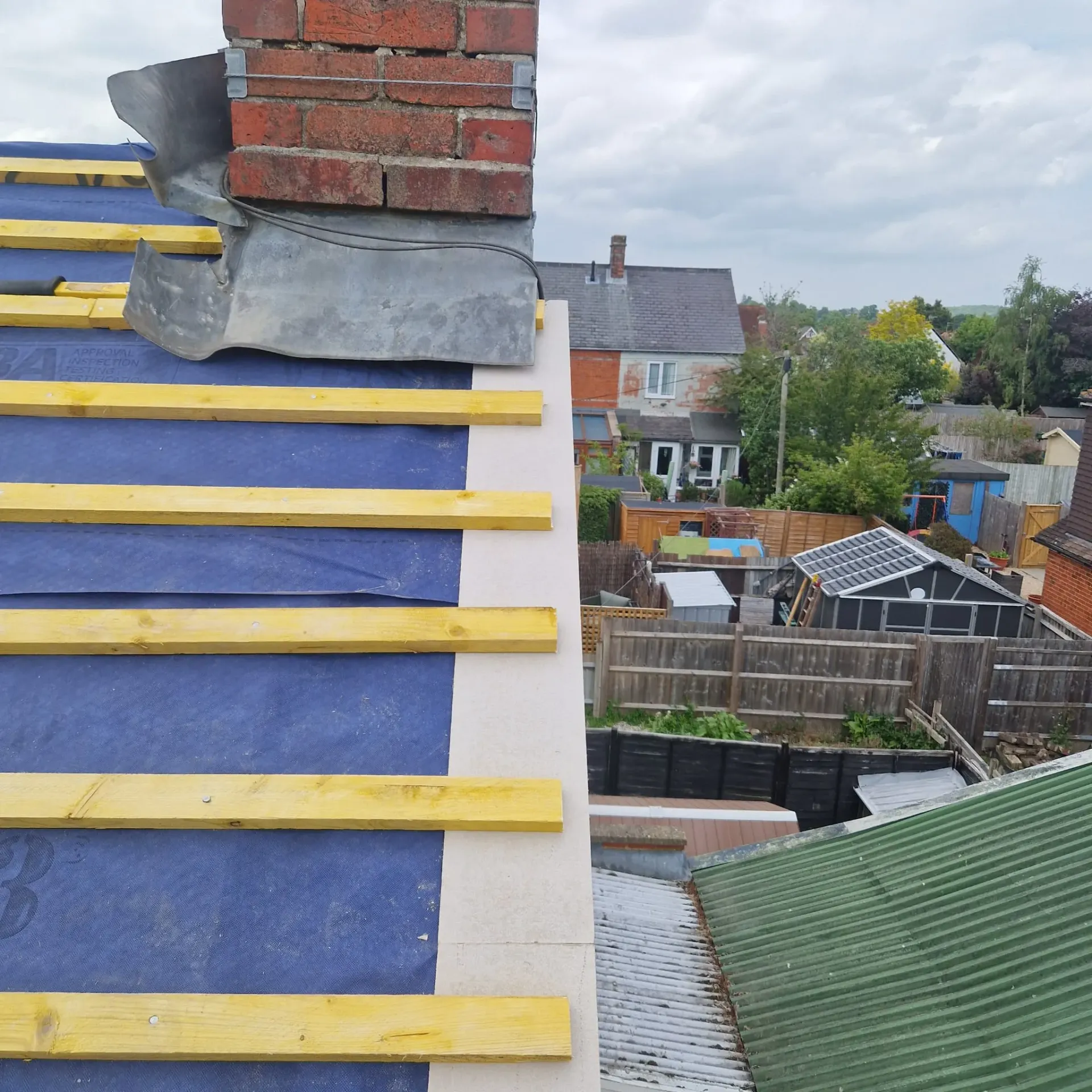
A chimney back gutter is a specially shaped lead tray fitted horizontally behind the chimney where the roof slope meets the brickwork. It catches the water sliding down the tiles above the chimney, turns it 90 degrees, and discharges it safely out onto the side flashings and down the roof.
Because it sits behind the stack on the uphill side, you cannot see it from your driveway or garden. We regularly get called out to homes across Reading, Coley, and Oxfordshire where a homeowner has paid someone to repoint the chimney brickwork or paint it with breathable sealer, only for the damp patch on the bedroom ceiling to come right back the next time it pours down. Until someone climbs up with a ladder or roof crawler to inspect the back gutter itself, the real problem gets missed.
How Secret Valleys Work (And Why They Catch People Out)
A traditional open valley has a wide strip of lead or GRP running down the V-shaped junction between two roof slopes. You can see the channel clearly from the ground. A secret valley (or secret gutter) does the exact same job—usually where a dormer window, a porch, or a flat roof extension meets a pitched tiled roof—but the tiles are cut closely together right over the top of the trough.
Architects and builders like secret valleys because they give a neat, uninterrupted line of tiles. From a roofer's point of view, they have one glaring weakness: they leave only a narrow gap under the tile edges for water to run down.
Because the channel is dark, damp, and sheltered from the wind, any moss washing off the higher roof tiles, along with pine needles, sycamore seeds, and autumn leaves, gets wedged inside the hidden trough. Over a few winters, that debris turns into a thick, spongy turf that acts like a dam.
3 Reasons Water Gets Past Intact Tiles in Back Gutters and Secret Valleys
When we strip back a couple of courses of tiles above a leaking chimney or down the side of a dormer, we almost always find one of three faults. None of them require a broken tile to soak your ceiling joists.
1. Leaf Dams and Slurry Overtopping the Upstand
A lead back gutter or secret valley isn't a sealed pipe; it is an open trough that relies on gravity. The lead goes up the roof slope by a few inches (called the upstand) underneath the bottom course of tiles.
When moss balls, dead leaves, or old mortar crumble into the back gutter behind a chimney, they block the two side outlets. In a light drizzle, the water trickles through the muck and escapes. In a heavy downpour, the trough fills up like a plugged sink. Within minutes, the standing water rises higher than the lead upstand under the tiles and pours straight over the top edge onto the timber rafters and plasterboard below.
2. Thermal Splits in Over-Long or Thin Lead Bays
Lead expands when the summer sun bakes the roof and contracts when temperatures drop below freezing. Because of this thermal movement, rolled lead sheet (which should comply with BS EN 12588) must be fitted in bays of limited length, and it shouldn't be nailed down on both sides so it can't move.
On wide chimneys—or down long secret gutters where someone used a single continuous strip of thin Code 3 lead instead of overlapping shorter bays of heavier Code 4 or Code 5 lead—the metal fatigues. First, you see a raised crease or ripple across the middle of the gutter. Soon after, that crease cracks right through. Every time it rains, water runs straight down the crack before it ever reaches the side flashing.
3. Capillary Draw and Saturated Mortar Fillets
Capillary draw is what happens when two flat surfaces—like the underside of a clay or concrete tile and the flat surface of a lead sheet—sit tightly against each other with a thin film of grit or silt between them. Instead of draining downhill, water actually gets sucked sideways and uphill through the microscopic gap.
Properly made secret valleys have a raised rib (a welt or water check) along the outer edge of the lead or GRP tray to break that suction and turn the water back into the channel. Worse still, some older roofs have sand-and-cement mortar packed into the gap of a secret valley or around a chimney back gutter. Once that mortar cracks and gets wet, it acts like a giant wick, drawing water sideways off the trough and dumping it onto the roofing felt and battens.
How We Diagnose and Properly Repair These Leaks
When you ask us out to trace a chimney or valley leak, we don't guess from the pavement and we won't just smear black bitumen paint or silicone over an old split. Bitumen paint bakes brittle in the sun and cracks within a year, leaving you right back where you started.
Here is how our City & Guilds qualified roofers handle the job properly:
- 1 Close-Up Roof Inspection: We get up safely onto the roof, lift two or three courses of tiles above the chimney back or along the secret valley edge, and take clear photos on our phones so you can see exactly what is going on up there.
- 2 Clearing Out vs Rebuilding: If the lead or GRP trough is completely sound and the leak is purely caused by a leaf and moss dam, we strip the abutting tiles back, clear the channel completely, trim back any overhanging tile nibs that are trapping muck, and relay the tiles cleanly.
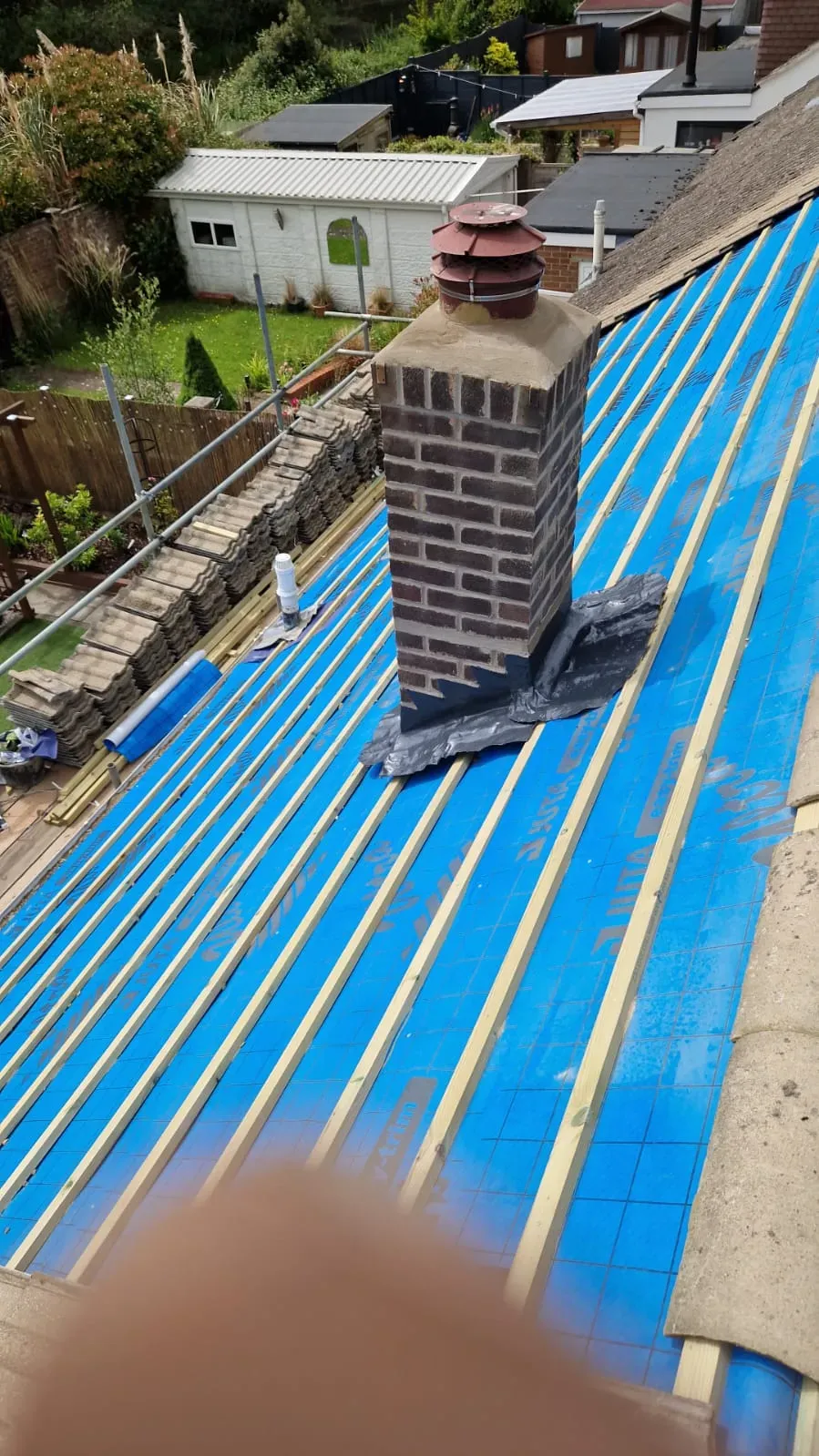
- 3 Replacing Split Lead Back Gutters: If the lead has split or the timber board underneath (the soleplate or gusset) has rotted soft, we strip out the old lead tray. We fit a new treated timber soleplate with a proper fall to each side, dress a new Code 5 rolled lead back gutter into place with proper upstands and side returns, and chase a separate lead cover flashing into the brickwork mortar joint pointed with lead sealant or lime mortar.
- 4 Upgrading Secret Valleys: Where a secret valley has failed because the trough is too shallow or lacks water checks, we install a deep-trough GRP dry valley or properly welted Code 4/5 lead valley with foam baffle strips where appropriate to stop driving rain and wind-blown leaves getting past the tile line, while still letting water drain freely.
A Quick Word on Shared Chimneys and Safe Access
Many chimneys on semi-detached and terraced homes sit directly astride the boundary line between you and your neighbour. Often, a split lead back gutter runs continuously behind both halves of the stack. Replacing just half of a single-piece back gutter rarely works well, so it's always worth having a friendly chat with next door—and if major structural rebuilding is needed on a shared stack, the Party Wall etc. Act 1996 may apply. We also follow strict HSE roof work safety rules: if a chimney sits high up on a steep pitch, we will erect a proper scaffold tower or chimney saddle scaffold with edge protection rather than taking risks off a ladder.
Got a Mysterious Damp Patch Near a Chimney or Valley?
We carry out honest, photo-backed leak inspections across Reading, Oxfordshire, Wokingham, Henley, Newbury, and surrounding areas.
Common Questions From Homeowners
Why does my chimney only leak when the wind blows from a certain direction?
If a lead back gutter has a low upstand under the tiles, or if a secret valley is half-choked with moss, ordinary vertical rain might just about drain away. When a gale blows rain straight against the roof slope, the wind pushes the water up and over the top edge of the lead tray or drives it sideways over the valley welt into the felt and battens.
Can you repair a split lead back gutter with flashing tape or sealant?
Only as an overnight emergency patch to stop water pouring in during a storm. Because the back gutter sits in a dish where water pools and temperatures swing wildly, sticky tapes peel up around the edges and silicone pulls away from dirty lead within months. Cutting in a new lead piece or replacing the tray is the only permanent fix.
Could a damp chimney breast be caused by an uncapped chimney pot rather than the back gutter?
Yes, it can—and telling the difference is part of a proper survey. Generally, water coming down an open flue or through porous brickwork shows up lower down the chimney breast on the wall plaster, often bringing yellow or brown soot salts with it. A leaking back gutter usually wets the loft timbers and the flat ceiling plaster directly behind the chimney stack first.
How often should secret valleys and chimney back gutters be cleared out?
If you have tall deciduous trees or pines near your house, checking them every two to three years—or after a heavy moss-fall—saves a lot of interior redecorating. We often clear secret valleys and check lead flashings at the same time as a routine roof health check or gutter clean.