Roofing Scams and Doorstep Traders to Avoid
Every year across Reading, Oxfordshire, and the surrounding towns, we get called out to put right roofs that were completely fine before a cold-caller knocked on the door. Here is a plain-English guide to how doorstep roofing scams work, your legal rights as a UK homeowner, and how to tell a proper roofer from a cowboy.
Quick Answer: The Golden Rules
- 1. Never let a cold-caller onto your roof. Reputable roofers do not knock on doors looking for afternoon work.
- 2. Demand a written 14-day cooling-off notice. By law, contracts signed at your home over £42 must include cancellation rights.
- 3. Never pay cash upfront at the doorstep. Never let a trader drive you to the bank or post office.
- 4. Check NFRC and TrustMark registration. Verify the company address and landline before anyone sets up a ladder.
Why Rogue Traders Love Targeting Roofs
If a plumber botches a tap under your sink, you can crouch down with a torch and see the leak straight away. Your roof is different. Because you cannot easily climb 30 feet up a ladder to inspect your own ridge tiles, underlay, or lead flashings, doorstep scammers rely on the fact that you have to take their word for what is happening up there.
Over the past 25 years working out of our base in Tadley and across Coley, Reading, Wokingham, Henley-on-Thames, and Oxfordshire, our team at Trustmark Roofing has seen every trick in the book. Worse still, we regularly get called to homes in places like Abingdon, Didcot, and Newbury where an elderly or busy homeowner has handed over thousands of pounds for a repair that was never needed—and actually left the roof leaking for the first time.
5 Classic Doorstep Roofing Scams to Watch Out For
Rogue traders rarely invent new scams; they stick to scripts that frighten homeowners into making a snap decision. Here is how they operate on the ground.
1. "We're working down the street and spotted a loose tile"
Most CommonA van pulls up outside and a polite lad knocks on your door in a clean high-vis vest. He tells you they are finishing a job two doors down, have a ladder and leftover mortar on the van, and noticed a slipped slate or cracked ridge tile on your roof. He offers to pop up and fix it for £40 or £80 "while the gear is out."
What really happens: Once he is out of sight on your roof, he intentionally snaps two or three tiles, kicks off a ridge cap, or rips a hole in your breathable membrane. Five minutes later he climbs down looking worried, shows you a photo on his phone of the damage he just caused, and tells you the roof timbers are rotten and need £6,000 of urgent structural work today.
2. Jet-Washing & "Miracle" Roof Coating Scams
You are told that moss on your concrete or clay tiles is "eating through the roof" and will cause the ceiling to cave in unless it is blasted off with a high-powered pressure washer and painted with a coloured "thermal waterproof sealant."
What really happens: Aggressive pressure washing strips the protective granular surface right off concrete tiles, making them porous and brittle, while driving gallons of water uphill under the laps into your loft. When we clean roofs, we take great care with pressure levels or scrape moss by hand, and we never trap moisture with thick, unbreathable paint that causes timber rafters to sweat.
3. Stock Photos of Rotten Rafters & Fake Wasp Nests
A trader offers a "free roof or loft health check." They pop their head through your loft hatch or climb a ladder for two minutes, then show you shocking close-up photos on a tablet of wet rot, woodworm, or crumbling chimney leadwork.
What really happens: Those photos were downloaded off the internet six months ago and shown to every pensioner on the street. When we carry out a roof survey, we take wide-angle and close-up photos that clearly show your property's background, brickwork, or garden so you can see for certain it is your own roof.
4. Spray Foam Insulation Scare Tactics
Cold-callers claiming to work with "government energy schemes" pitch spray foam insulation pumped directly against the underside of your roof tiles or felt, promising huge heating bill savings. Or conversely, another cold-caller rings you up claiming your existing loft insulation is illegal and demands £4,000 on the spot to rip it out.
What really happens: Poorly applied closed-cell spray foam blocks vital roof ventilation, traps condensation against timber rafters, and stops mortgage lenders from approving equity release or house sales. If you do have spray foam that needs removing for a remortgage, always book an established roofing firm yourself—never buy from a telephone cold-caller.
5. The Escalating Cash Demand
A gang quotes £450 on a scrap of paper to repoint a chimney or replace guttering. Halfway through the morning, they strip back a big patch of tiles, leave your roof open to the rain, and announce they have found a "major problem" that will cost £5,500 in cash to put back together. If you hesitate, they threaten to walk off site and leave your house exposed to the weather.
Safe Access, Proper Underlay & Branded Vehicles
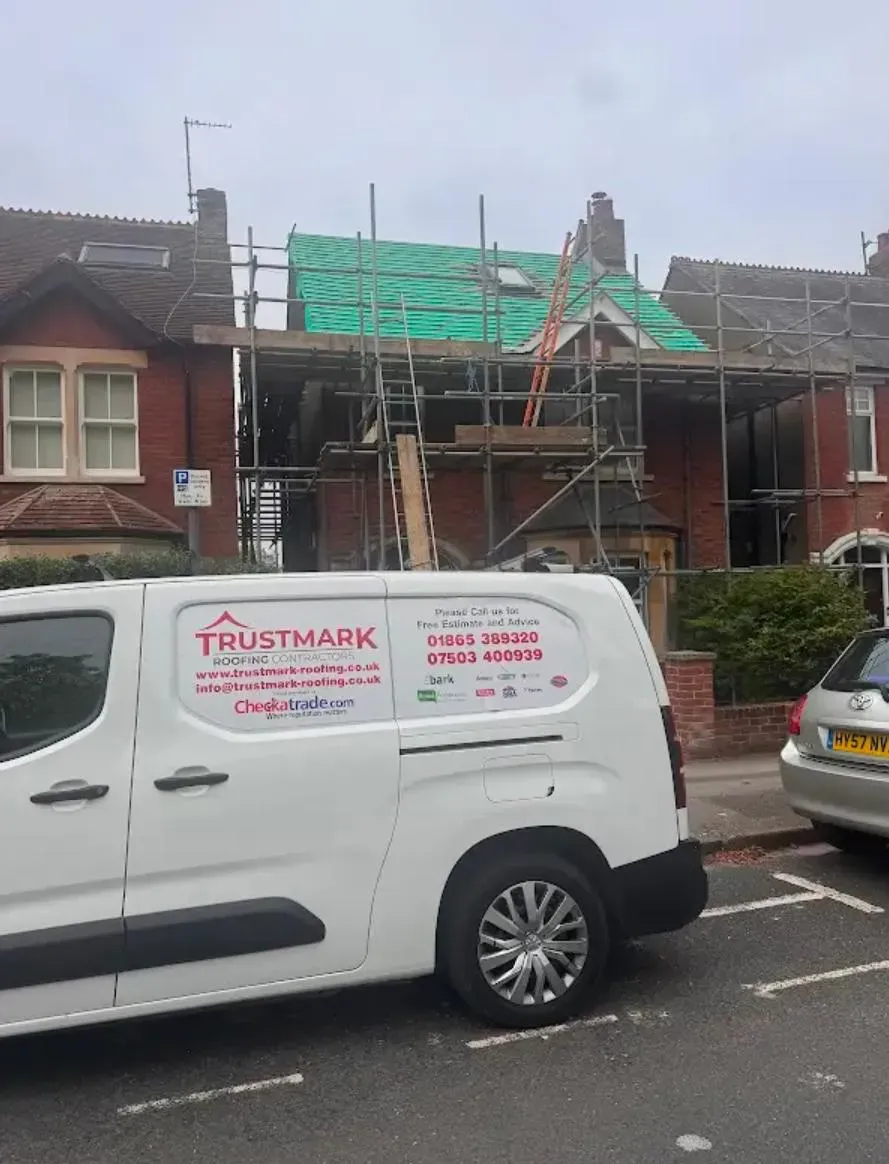
When a genuine roofing crew carries out a re-roof or major repair, you will see proper edge protection and scaffolding conforming to Health and Safety Executive (HSE) standards, graded timber battens, breathable membranes, and sign-written vans—not three blokes working off a single rickety extension ladder.
The Homeowner's Vetting Checklist: 6 Checks Before You Hire
Before you agree to any roof repair or replacement, run the contractor through these six simple checks. Any honest tradesperson will happily provide every single one without making excuses.
1. Statutory 14-Day Cooling-Off Period
Under the Consumer Contracts Regulations, if you sign a contract in your home for work costing over £42, you are legally entitled to a 14-day cooling-off period. The trader must give you written notice of your right to cancel. If they pressure you to waive this for a "made-up emergency," tell them to leave.
2. Independent Trade Body Accreditations
Look for membership in the NFRC (National Federation of Roofing Contractors) and Government-endorsed TrustMark. Beware of vans covered in stickers—rogue traders print logos they have no right to use. Always look the company up directly on the NFRC or TrustMark website to confirm they are registered.
3. Fully Itemised Written Quote
Never accept a figure scribbled on the back of a flyer or business card. A proper quote sets out the full scope of works: scaffolding, skip hire, breathable membrane specification, batten gauge, tile or slate type, lead code thickness, VAT breakdown, and full company address.
4. Building Regulations & NFRC Competent Person
If you are replacing more than 25% of your roof covering, statutory Building Regulations require you to notify local Building Control (such as Reading Borough Council or South Oxfordshire District Council) and upgrade loft insulation. Registered NFRC Competent Person contractors can self-certify this compliance for you.
5. Public Liability Insurance & Guarantees
Ask to see proof of Public Liability Insurance (we carry £5m cover) and ask what happens if a leak appears two years later. A burner mobile number is not a guarantee; look for a written 10-year workmanship warranty backed by an established local business.
6. Sensible Payment Terms
For minor roof repairs, you should only pay once the job is finished and you have seen photos of the completed work. For large re-roofing projects, staged payments tied to material delivery and completion milestones by bank transfer or card (or regulated finance) keep your money traceable.
At a Glance: Doorstep Rogue Trader vs Accredited Local Roofer
| What to Check | Doorstep Rogue Trader | Trustmark Roofing |
|---|---|---|
| First Contact | Cold-calls at your door claiming to see a loose tile from the road. | Only visits by pre-booked appointment when invited by you. |
| Inspection & Proof | Climbs up alone and shows blurry or stock photos of damage. | Clear, dated photographic evidence of your actual roof before & after. |
| Quotation | Verbal price or cash figure scribbled on a flyer; changes mid-job. | Free, written, fully itemised quotation with transparent pricing. |
| Cooling-Off Rights | Pressures you to start within the hour to bypass the 14-day rule. | Full statutory 14-day cooling-off period respected on home contracts. |
| Accreditations | Fake logos on van or unverified directory listings. | Verified NFRC, TrustMark, CHAS, and SafeContractor accredited. |
| Payment Options | Demands cash upfront or offers to drive you to the bank. | Traceable bank invoicing, card payments, and 0% APR finance options. |
What Should You Do If a Rogue Trader Is at Your Door Right Now?
If someone has knocked on your door claiming your roof is dangerous, or if you have already agreed to let someone climb up and now feel uncomfortable:
- • Say no firmly and shut the door: Tell them you rent the property or that your brother-in-law is a roofer who looks after it.
- • Do not hand over cash: If they become aggressive, refuse to leave your drive, or try to march you to a cash machine, call the Police on 999 immediately (or 101 if they have left).
- • Report them to Trading Standards: Contact the Citizens Advice Consumer Helpline on 0808 223 1133 and note down their vehicle registration number if it is safe to do so.
- • Get an honest second opinion: If they have already removed tiles or left your roof open to the rain, give our team a ring on 0118 230 3346. We can come out, make the roof watertight, and tell you honestly whether anything actually needs fixing.
Frequently Asked Questions About Roofing Scams
Can a roofer waive my 14-day cooling-off period if they say it's an emergency?
A trader can only start work inside the 14-day cooling-off period if you explicitly sign a written request asking them to start straight away. Doorstep scammers abuse this by inventing a fake emergency so you sign away your cancellation rights—or they don't give you paperwork at all, which is a criminal offence.
How much should a genuine minor tile repair cost?
Replacing one or two accessible slipped tiles or re-bedding a single ridge tile from a safe ladder usually costs between £120 and £280 depending on roof height and tile type. If someone knocks on your door offering a £30 fix that suddenly turns into £4,000 ten minutes later, you are dealing with a scammer.
What if a cold-caller has already damaged my roof?
Do not let them back onto your ladder to "finish" the job. Ask them to leave, report the incident to Trading Standards and the police, and ask an accredited NFRC contractor to inspect and photograph the deliberate damage. Those photos and a professional written report can be used by Trading Standards and your bank if you are trying to recover funds.
Related Services & Guides
Explore more practical advice from our roofing team or view our core local roofing services.
Local Roofers in Reading
Looking for reliable local roofers in Reading? Trustmark Roofing offers expert repairs & installations with 25+ years experience. Get a free quote today!
Do You Need Building Regs for a New Roof?
Find out when UK Building Regulations apply to a new roof, including the 25% rule, Part L insulation upgrades, and how NFRC roofers self-certify your work.
What to Do When Your Roof Leaks in Heavy Rain
Discover safe, practical steps to contain a sudden roof leak during heavy rain, protect your electrics, and get your home ready for an emergency roofer.
Wooden Fascias: Cap Over or Full Replacement?
Should you cap over old wooden fascias with uPVC or pay for a full replacement? Learn why capping over rotting timber can damage your roof rafters.
How Long Does an EPDM Rubber Roof Last?
Find out why a seamless, single-sheet EPDM rubber roof easily lasts 40 to 50 years with hardly any maintenance compared to traditional torch-on felt.
Do You Need a Roof Survey Before Buying a House?
Standard RICS surveys often only check roofs with binoculars. Learn how a proper roofer's inspection spots hidden rot and helps you renegotiate the price.
Dry Ridge and Verge Systems vs Mortar Bedding
Compare dry-fix ridge and verge systems with traditional mortar bedding. Learn about BS 8612 standards, loft ventilation, and stopping wind uplift.
Real Lead Flashing vs Lead-Free Alternatives
Compare traditional rolled lead sheet with synthetic lead-free flashing. Learn about lifespans, costs, and which option suits your chimney stack best.
Commercial Valley Gutter Cleaning and Lining
Learn why blocked or rusted valley gutters cause warehouse floods, and how planned silt clearance and seamless linings stop leaks.
Why Do Some Fibreglass Roofs Crack or Pinhole?
Find out why cheap GRP flat roofs blister or crack. Learn how dry OSB3 decking, expansion joints and proper resin mixing ensure a watertight finish.
Open-Cell vs Closed-Cell Spray Foam Removal
Learn the difference between soft open-cell and rigid closed-cell spray foam, and how we remove both safely without damaging your roof timbers.
Why Pressure Washing Roof Tiles Causes Leaks
Learn why jet washing roof tiles strips their protective surface, cracks mortar, and floods your loft, plus how manual scraping safely clears moss.
Why Chimney Back Gutters and Secret Valleys Leak
Find out why hidden chimney back gutters and secret valleys cause ceiling damp patches, even when your roof tiles look completely intact.
Looking for a Vetted, Accredited Roofer You Can Check Out Properly?
See our credentials, photo surveys, and customer reviews on our Local Roofers page or book a Professional Roof Inspection.