How Long Does an EPDM Rubber Roof Last?
The short answer? A properly laid single-sheet EPDM rubber roof will comfortably last 40 to 50 years. Unlike old-fashioned roofing felt that bakes, blisters, and splits after a decade or so, modern synthetic rubber stays flexible through freezing winters and scorching summers with barely any upkeep.
Got a flat roof leaking or showing its age?
Speak directly to our roofing team for honest advice or a free roof health check.
At a Glance: What Homeowners Need to Know
- ✓ Real-world lifespan: 40 to 50+ years when fitted over sound timber decking.
- ✓ Why it outlasts felt: Fitted in a single seamless sheet for standard garages and extensions—no joints to peel open.
- ✓ Typical installation time: 1 to 2 days for an average domestic garage or kitchen extension.
- ✓ Upkeep required: Clear autumn leaves from the outlets once or twice a year. No recoating or chippings needed.
Why EPDM Outlasts Traditional Felt by Decades
If you have ever had a flat roof fail on a garage, porch, or rear extension, there is a very high chance it was covered in traditional mineral felt. Feltcomes in one-metre-wide rolls, which means a roofer has to overlap and weld dozens of seams across your roof. Over time, summer UV rays bake the bitumen dry, winter frosts make it brittle, and the timber deck underneath naturally expands and contracts. Eventually, one of those welded lap joints pulls apart—and water gets in.
EPDM (Ethylene Propylene Diene Monomer) works completely differently. First, synthetic rubber does not degrade under UV light or ozone exposure. It has up to 300% elasticity, meaning as your house settles and timbers shift slightly between winter and summer, the rubber simply stretches and moves with the building without cracking.
Second, EPDM is manufactured in massive sheets up to 15 metres wide. For almost every domestic garage, dormer, or kitchen extension we work on across Reading, Coley, and Oxfordshire, we roll out one single piece of rubber to cover the entire roof. If there are no seams on the flat surface of your roof, there are no joints that can split open fifteen years down the line.
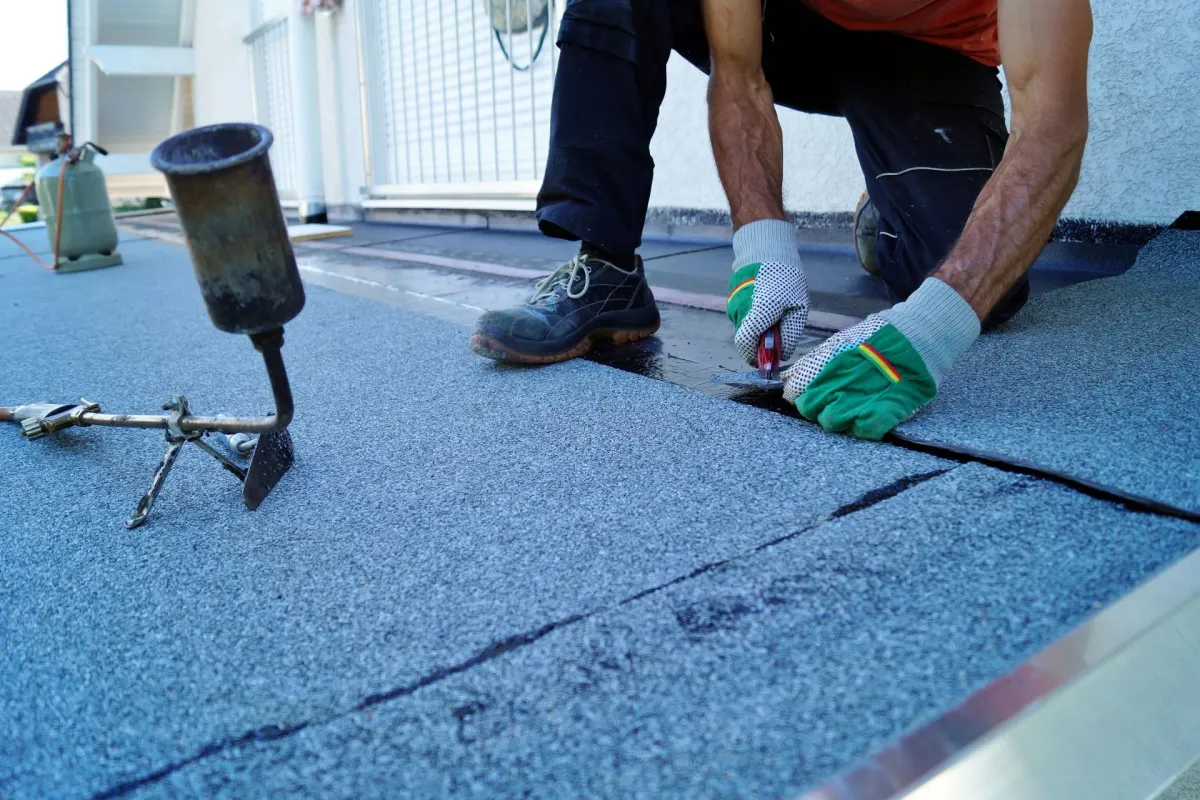
Traditional torch-on felt relies on multiple heat-welded seams across the roof deck, whereas single-sheet EPDM eliminates surface joints altogether.
Flat Roof Lifespan Comparison
Cold-applied, seamless on standard domestic roofs, UV stable, and won't crack or blister.
Tough and seamless, though rigid resins can occasionally crack on larger roofs if timbers flex.
Much better than old 1980s pour-and-roll felt, but still relies on heat-welded lap joints.
How Cold-Applied Installation Protects Your Property
Another huge advantage of EPDM is how we fit it on the day. Traditional felt requires roaring propane gas torches on your roof, which always carries a fire risk around dry eaves, timber soffits, and loft insulation.
Our EPDM rubber roofing installations are 100% cold-applied. Once we strip back the old failed covering and replace any rotten decking boards with fresh 18mm structural OSB3 sterling board, we roll out the rubber sheet and let it relax for half an hour. We then fold it back and bond it directly to the timber deck using water-based deck adhesive, using contact adhesive around the perimeter upstands and drip edges.
We finish the edges with neat, clip-in uPVC or aluminium perimeter trims that clamp the rubber down tightly. Because there are no naked flames, fumes, or boiling bitumen pots, the job is cleaner, safer, and usually wrapped up in a day or two for a standard single-garage or extension roof.
What Can Shorten an EPDM Roof's Lifespan?
While the Firestone and Elevate membranes we fit are engineered to last half a century, a rubber roof is only ever as good as the surface underneath it and the detailing around the edges. In our 25+ years of roofing, whenever we are called out to inspect a leaking rubber roof laid by someone else, it almost always comes down to one of four shortcuts:
1. Laying Over Damp Timber
Never let anyone glue new rubber straight over old, wet roofing felt or spongy chipboard. Trapped moisture rots the joists from the inside out and stops the adhesive bonding properly, leading to huge bubbles under the membrane.
2. Skimping on Edge Trims
Wind uplift always starts at the roof edges. Proper two-part mechanical edge trims and wall flashing bars must be used—not just a bead of cheap silicone mastic squeezed into a brickwork joint.
3. Sharp Debris Underfoot
EPDM handles hail, frost, and normal foot traffic for window cleaners without any trouble. However, dropping sharp ladders, scaffolding tubes, or stray masonry nails onto the roof can puncture the 1.2mm or 1.5mm sheet.
4. Poor Pipe & Skylight Flashing
Where soil pipes, flues, or roof lanterns pass through the deck, proper uncured FormFlash rubber tape and primer must be moulded around the upstand rather than relying on standard household tape.
How Much Maintenance Does an EPDM Roof Actually Need?
Very little. Unlike felt roofs, which needed painted solar reflective coatings or loose stone chippings swept back into place, EPDM does not need any protective surface dressings. It also resists moss and algae growth far better than rough mineral felt because the smooth slate-grey rubber surface offers nothing for roots to grip onto.
All we recommend to our customers is a quick visual check from a safe vantage point each autumn and spring:
- Keep rainwater outlets clear: Sweep away wet leaves, twigs, and pine needles from the gutter edge or internal drain outlets so water can run off freely.
- Cut back overhanging branches: If trees brush against the roof in high winds, trim them back so branches don't scrape the perimeter trims year after year.
- Check brickwork lead flashings: Where your flat roof meets the main house wall, check that the stepped lead flashing tucked into the mortar joint hasn't worked loose over winter.
And if someone accidentally drops a tool or a slate slips from the main pitched roof and punctures the rubber? Unlike fibreglass or felt, repairing EPDM takes about twenty minutes. We clean the spot with primer and apply a self-vulcanising rubber patch that chemically bonds into the sheet, making it permanently watertight again.
Building Regulations When Replacing a Flat Roof
One practical point worth knowing before you budget for a new flat roof: if you are stripping and replacing more than 50% of a roof above a heated living space—such as a kitchen extension, home office, or bedroom dormer—UK Building Regulations (Part L) require you to bring the thermal insulation up to current standards at the same time.
In practice, this usually means converting an old draughty "cold roof" into a modern warm roof system by laying rigid PIR insulation boards above the structural timber deck before bonding the EPDM membrane on top. It adds slightly to the height of the fascia board, but it stops indoor condensation dead in its tracks and makes the room noticeably warmer in winter. Unheated standalone garages and outbuildings are exempt from this insulation rule.
As an NFRC, TrustMark, and SafeContractor accredited company with over 25 years of experience, we handle all Building Control compliance and back our installations with a 10-year workmanship guarantee and £5m public liability insurance.
Common Questions About EPDM Rubber Roofs
Does standing or "ponding" water ruin an EPDM roof?
No. While we always check the timber firrings to make sure your roof has a proper fall towards the guttering, EPDM is actually the same material used to line commercial reservoirs and garden ponds. A shallow puddle left after heavy rain will not rot or break down the rubber membrane.
Can you walk on an EPDM rubber roof to clean upstairs windows?
Yes, occasional foot traffic for window cleaning, clearing gutters, or painting masonry is completely fine. Just wear soft-soled trainers (check the treads for sharp flint stones first) and if you need to rest a ladder on the flat roof, place a piece of timber board or an offcut of carpet underneath the ladder feet to spread the load.
Is EPDM better than GRP fibreglass?
Both are miles ahead of old felt, and we install both GRP fibreglass and EPDM depending on the roof layout. EPDM generally wins for standard rectangular extensions, dormers, and garages because it can be laid in one flexible sheet without joints, and it can be installed in cooler weather when fibreglass resins struggle to cure properly.
Related Services & Guides
Explore our flat roofing services and straightforward advice for homeowners across Oxfordshire, Reading, and the South of England.
Epdm Rubber Roofing in Reading
Expert EPDM rubber roofing in Reading and Oxfordshire. 25+ years experience, 10-year guarantees, and durable Firestone installations. Get your free quote today.
Do You Need Building Regs for a New Roof?
Find out when UK Building Regulations apply to a new roof, including the 25% rule, Part L insulation upgrades, and how NFRC roofers self-certify your work.
What to Do When Your Roof Leaks in Heavy Rain
Discover safe, practical steps to contain a sudden roof leak during heavy rain, protect your electrics, and get your home ready for an emergency roofer.
Wooden Fascias: Cap Over or Full Replacement?
Should you cap over old wooden fascias with uPVC or pay for a full replacement? Learn why capping over rotting timber can damage your roof rafters.
Do You Need a Roof Survey Before Buying a House?
Standard RICS surveys often only check roofs with binoculars. Learn how a proper roofer's inspection spots hidden rot and helps you renegotiate the price.
Dry Ridge and Verge Systems vs Mortar Bedding
Compare dry-fix ridge and verge systems with traditional mortar bedding. Learn about BS 8612 standards, loft ventilation, and stopping wind uplift.
Real Lead Flashing vs Lead-Free Alternatives
Compare traditional rolled lead sheet with synthetic lead-free flashing. Learn about lifespans, costs, and which option suits your chimney stack best.
Commercial Valley Gutter Cleaning and Lining
Learn why blocked or rusted valley gutters cause warehouse floods, and how planned silt clearance and seamless linings stop leaks.
Why Do Some Fibreglass Roofs Crack or Pinhole?
Find out why cheap GRP flat roofs blister or crack. Learn how dry OSB3 decking, expansion joints and proper resin mixing ensure a watertight finish.
Open-Cell vs Closed-Cell Spray Foam Removal
Learn the difference between soft open-cell and rigid closed-cell spray foam, and how we remove both safely without damaging your roof timbers.
Why Pressure Washing Roof Tiles Causes Leaks
Learn why jet washing roof tiles strips their protective surface, cracks mortar, and floods your loft, plus how manual scraping safely clears moss.
Roofing Scams and Doorstep Traders to Avoid
Learn how to spot common UK doorstep roofing scams. Check our homeowner guide on 14-day cooling-off periods, NFRC accreditation, and itemised quotes.
Why Chimney Back Gutters and Secret Valleys Leak
Find out why hidden chimney back gutters and secret valleys cause ceiling damp patches, even when your roof tiles look completely intact.
Ready to Replace Your Old Flat Roof for Good?
From our base in Tadley, our City & Guilds qualified roofers install seamless EPDM rubber roofs across Reading, Coley, Oxford, Abingdon, Didcot, Henley, Newbury, Basingstoke, and the wider region. Every installation includes a free survey, transparent fixed-price quote, and our 10-year workmanship guarantee.