Why Pressure Washing Roof Tiles Causes Leaks
Having a door-knocker offer to jet wash the moss off your roof for a few hundred quid can sound tempting. The trouble is, firing high-pressure water at concrete and clay tiles is one of the fastest ways to ruin a perfectly good roof. Here is an honest look at what a pressure washer actually does to your tiles, why it voids manufacturer warranties, and how we clear moss safely without flooding your loft.
The Short Answer: What You Need to Know
- Never jet wash a roof: High-pressure water strips the protective granular finish off concrete tiles, making them porous and prone to frost cracking.
- It causes instant leaks: Roof tiles are designed to shed rain falling from above, not pressurised water blasted upwards or sideways through overlaps.
- The safe alternative: Proper moss removal uses hand-profiled scrapers tailored to the shape of your tiles, followed by a professional biocide treatment that kills the root spores.
- Typical time & cost: A safe scrape and biocide treatment on a standard 3-bedroom semi usually takes 1 to 2 days and costs far less than repairing water-damaged battens and ceilings.
What Happens When You Jet Wash a Roof?
Every spring and summer across Reading, Coley, and Oxfordshire, we get called out to inspect roofs that have suddenly started leaking right after being "cleaned" by a rogue trader with a patio washer and a ladder.
To the untrained eye, a jet-washed roof looks brand new from the driveway because the bright orange or grey clay and concrete underneath is exposed. What you are actually looking at is raw, stripped material that has lost its weatherproofing.
Even the National Federation of Roofing Contractors (NFRC) and major tile manufacturers like Marley and Redland explicitly warn against using pressure washers on pitched roofs. Doing so immediately voids any remaining tile warranty.
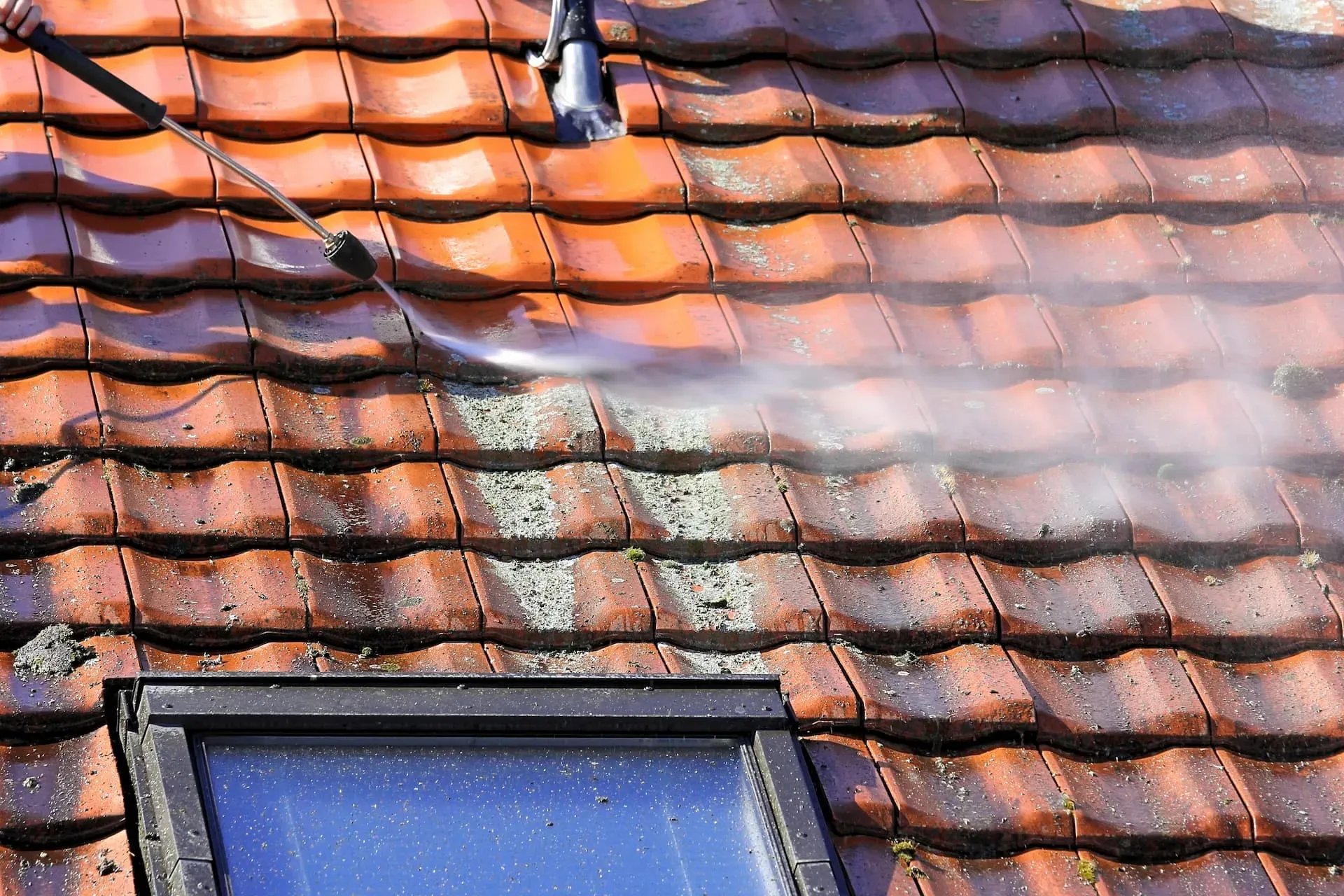
High-pressure jet washing blasts away the protective surface layer on roof tiles and drives water past the overlaps into the roof space.
4 Ways High-Pressure Washing Ruins Your Roof
1. Strips the Protective Granular Coating
Concrete tiles have a factory-applied acrylic or granular surface coat that sheds water. A pressure washer acts like liquid sandpaper, ripping that top layer clean off and leaving the bare, sandy concrete exposed to the elements. Once porous, the tile absorbs rainwater like a sponge, gets heavy, and cracks as soon as winter frosts freeze the trapped moisture.
2. Floods the Underlay and Loft
Interlocking and plain tiles rely on gravity and overlap channels to guide rainwater down into the guttering. When someone fires a jet lance across the roof, water is forced sideways and upwards under the overlaps. If your property has older bitumen felt with a few tears in it, tens of litres of dirty moss water end up pouring straight onto your loft insulation and bedroom ceilings.
3. Blows Out Ridge and Hip Mortar
Unless your roof has recently been upgraded to a mechanical dry ridge system, your ridge tiles, hip irons, and verges are bedded in sand and cement mortar. A high-pressure jet easily blasts out weathered pointing and loosens lead flashing around chimney stacks, leaving your ridge tiles unstable in high winds.
4. Cracks Tiles by Walking on the Roof
Pressure washing companies rarely use proper roof ladders, crawl boards, or edge protection. Walking directly on wet, slippery concrete or brittle clay tiles breaks the nibs on the back of the tiles or snaps the bottom corners. You often won't notice the cracked tiles until heavy autumn rain starts dripping through the rafters.
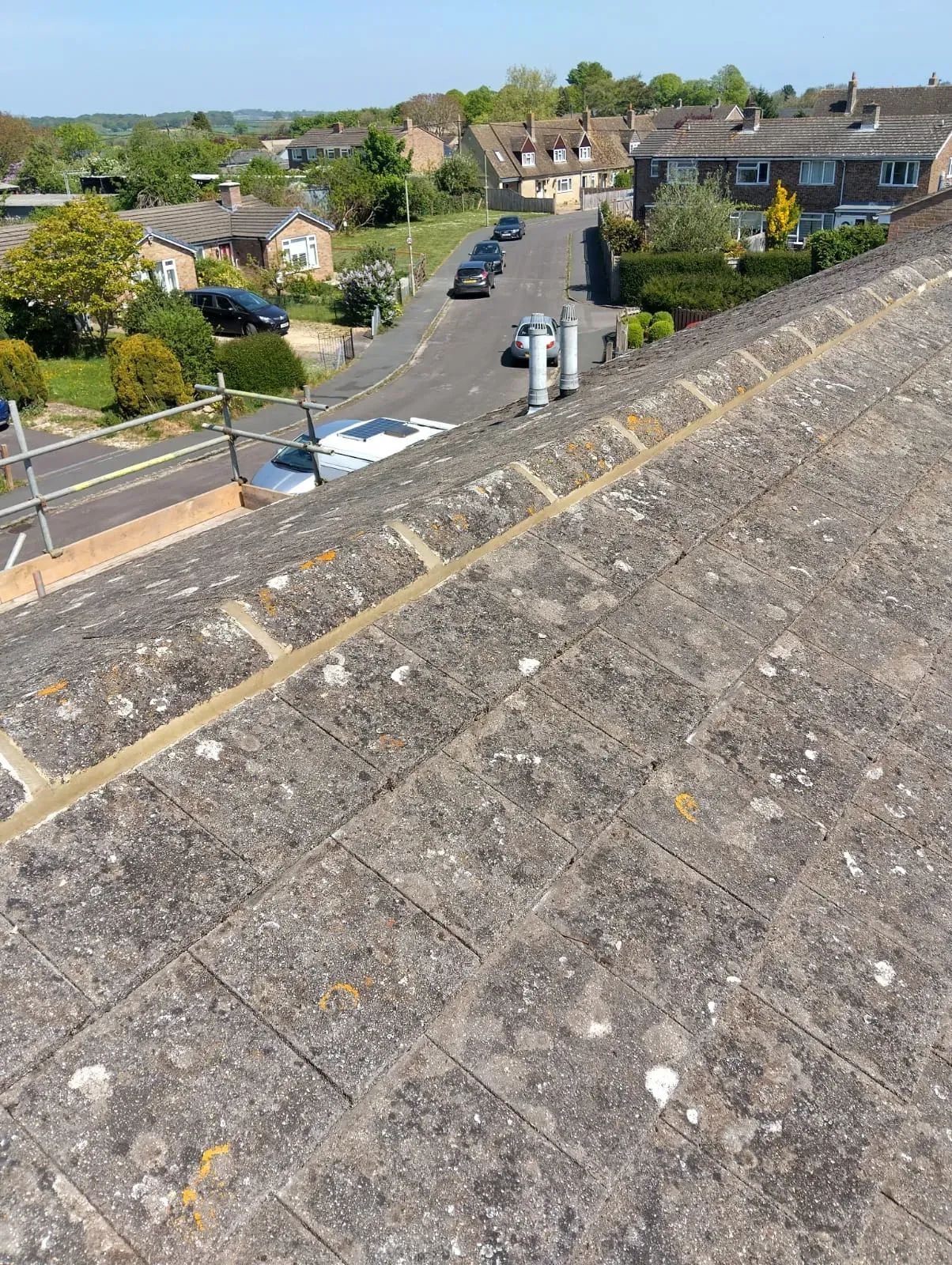
Inspecting weathered concrete tiles and re-bedding ridge mortar properly before carrying out any roof restoration work.
How We Clear Moss Safely Without Damaging Tiles
Leaving thick pillows of moss on your roof isn't ideal either—it holds damp against timber battens, blocks valleys, and fills up your downpipes every time it rains. The trick is removing it mechanically and gently without water pressure.
When our City & Guilds qualified roofers carry out a professional roof restoration, we work from safe access equipment or roof ladders to spread our weight evenly. Here is how a proper clean works on the day:
- Downpipe Protection: First, we disconnect or plug your gutter downpipes and lay tarpaulins over your driveway, conservatory, and flowerbeds so no moss washes into your soakaways.
- Manual Profile Scraping: Using steel blades shaped to match the exact profile of your concrete or clay tiles (such as Double Roman, Ludlow, or Rosemary), we gently scrape away the heavy moss growth by hand, working downwards with the overlap of the tile.
- Swapping Broken Tiles & Repointing: Because we are qualified roofers—not just driveway cleaners—we replace any cracked tiles we find, check your chimney leadwork, and re-point loose ridge or verge mortar while we are up there.
- Biocide Soft-Wash Treatment: Finally, we apply a low-pressure, HSE-approved biocide treatment using a knapsack sprayer. This soaks into the microscopic pores of the tile, killing off deep root spores, green algae, and stubborn lichen over the following months without stripping a single granule from the tile.
How to Spot a Rogue Roof Cleaner at Your Door
Across towns like Tadley, Basingstoke, Henley-on-Thames, Didcot, and Abingdon, cold-calling roof cleaners are a common sight. Before letting anyone near your roof, watch out for these warning signs:
Already Had Your Roof Jet Washed? What to Check
If you've recently had your roof pressure washed and you're worried about damage—or you've spotted damp patches on an upstairs ceiling—don't panic. Pop your head through the loft hatch with a torch on a bright day:
- Check for pinpricks of daylight: This shows where tiles have shifted, cracked, or lost their interlocking seating under the force of the lance.
- Feel the roofing felt and insulation: Check if the breathable membrane or older sarking felt is sagging, torn, or damp, especially around valleys and chimney breasts.
- Inspect your gutters and valleys: Look for piles of loose sand and tile granules sitting in the guttering—that is the protective surface layer of your roof washed away.
Whether you need a couple of cracked tiles swapped out, a valley cleared, or an honest roof inspection to check your underlay, our team at Trustmark Roofing is happy to take a look and give you straightforward, photo-backed advice. With over 25 years of experience, £5m public liability insurance, and a 10-year workmanship guarantee on all repair and restoration work, we'll get your roof watertight again without any hard sell.
Common Questions About Roof Moss & Cleaning
Does biocide wash off the moss straight away?
Manual scraping removes around 90% of the visible moss bulk on the day we visit. Once the biocide treatment is sprayed on, any remaining thin lichen spots or root spores die back naturally over 3 to 6 months, turning brown and washing away gently with normal rainfall.
How long does a professional scrape and biocide treatment last?
On most homes across Oxfordshire, Berkshire, and Hampshire, a thorough scrape and commercial-grade biocide keeps heavy moss away for 3 to 5 years. North-facing roof slopes or houses tucked right beneath overhanging oak and beech trees may benefit from a quick top-up spray every few years.
Can stripped, porous concrete tiles be saved, or do I need a new roof?
If the tiles have only been jet washed once and the underlying felt and timber battens are still dry and solid, you rarely need an immediate full replacement. Replacing any cracked tiles and re-pointing the ridge is usually enough to keep the roof watertight for years, though you should keep an eye on the tiles after heavy winter frosts.
Related Services & Further Reading
Explore our specialist roof restoration services and practical homeowner guides.
Roof Restoration in Reading
Revitalise your home with Reading's roof restoration experts. 25+ years' experience, 10-year guarantees, and 0% finance. Get your free quote today.
Do You Need Building Regs for a New Roof?
Find out when UK Building Regulations apply to a new roof, including the 25% rule, Part L insulation upgrades, and how NFRC roofers self-certify your work.
What to Do When Your Roof Leaks in Heavy Rain
Discover safe, practical steps to contain a sudden roof leak during heavy rain, protect your electrics, and get your home ready for an emergency roofer.
Wooden Fascias: Cap Over or Full Replacement?
Should you cap over old wooden fascias with uPVC or pay for a full replacement? Learn why capping over rotting timber can damage your roof rafters.
How Long Does an EPDM Rubber Roof Last?
Find out why a seamless, single-sheet EPDM rubber roof easily lasts 40 to 50 years with hardly any maintenance compared to traditional torch-on felt.
Do You Need a Roof Survey Before Buying a House?
Standard RICS surveys often only check roofs with binoculars. Learn how a proper roofer's inspection spots hidden rot and helps you renegotiate the price.
Dry Ridge and Verge Systems vs Mortar Bedding
Compare dry-fix ridge and verge systems with traditional mortar bedding. Learn about BS 8612 standards, loft ventilation, and stopping wind uplift.
Real Lead Flashing vs Lead-Free Alternatives
Compare traditional rolled lead sheet with synthetic lead-free flashing. Learn about lifespans, costs, and which option suits your chimney stack best.
Commercial Valley Gutter Cleaning and Lining
Learn why blocked or rusted valley gutters cause warehouse floods, and how planned silt clearance and seamless linings stop leaks.
Why Do Some Fibreglass Roofs Crack or Pinhole?
Find out why cheap GRP flat roofs blister or crack. Learn how dry OSB3 decking, expansion joints and proper resin mixing ensure a watertight finish.
Open-Cell vs Closed-Cell Spray Foam Removal
Learn the difference between soft open-cell and rigid closed-cell spray foam, and how we remove both safely without damaging your roof timbers.
Roofing Scams and Doorstep Traders to Avoid
Learn how to spot common UK doorstep roofing scams. Check our homeowner guide on 14-day cooling-off periods, NFRC accreditation, and itemised quotes.
Why Chimney Back Gutters and Secret Valleys Leak
Find out why hidden chimney back gutters and secret valleys cause ceiling damp patches, even when your roof tiles look completely intact.
Want Your Roof Cleaned or Repaired Properly?
Skip the high-pressure cowboys. Talk to Trustmark Roofing for safe manual moss removal, honest roof health checks, and guaranteed repairs across Reading, Oxfordshire, Tadley, and the South of England.