Dry Ridge and Verge Systems vs Mortar Bedding
If you have noticed chunks of grey cement lying on your driveway or driveway path after a frost, your roof’s mortar bedding is failing. Here is a straightforward breakdown of why traditional sand-and-cement pointing cracks over time, how modern mechanical dry-fix systems solve the problem, and when it makes sense to upgrade vs patch repair.
The Short Answer: Why Roofers Moved Away from Wet Mortar
For decades, roofers bedded ridge tiles (along the very top peak of the roof) and verge tiles (the overhanging edges on the gable ends) onto a thick bed of sand and cement. When mixed properly with a plasticiser, mortar looks neat on day one. The problem is that a pitched roof is never completely still.
Timber rafters and roof trusses expand and contract as temperatures shift from baking summer sun to winter frosts. Mortar is rigid; it doesn't flex with the timber. Within a few years, hairline cracks open up along the joint. Once winter rain gets into those cracks and freezes overnight, it expands and pushes the mortar apart—a process roofers call the freeze-thaw cycle.
Before long, whole sections of pointing drop out into the gutters or onto the ground below, leaving your ridge tiles held in place by gravity alone. A mechanical dry ridge or dry verge system replaces wet cement altogether, using stainless steel screws, storm clips, and weatherproof seals to lock every single tile directly to the roof structure.
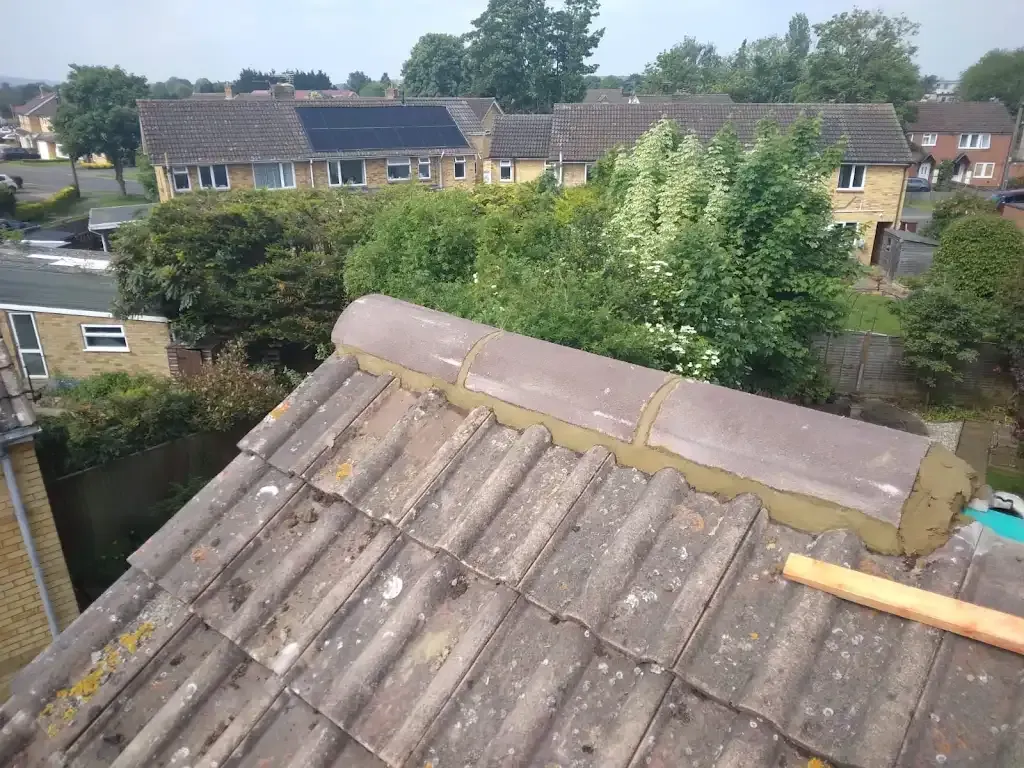
Traditional Mortar Bedding
Relies on sand and cement adhesion. Needs periodic repointing as seasonal timber movement and winter frosts cause the rigid mortar bed to crack and loosen.
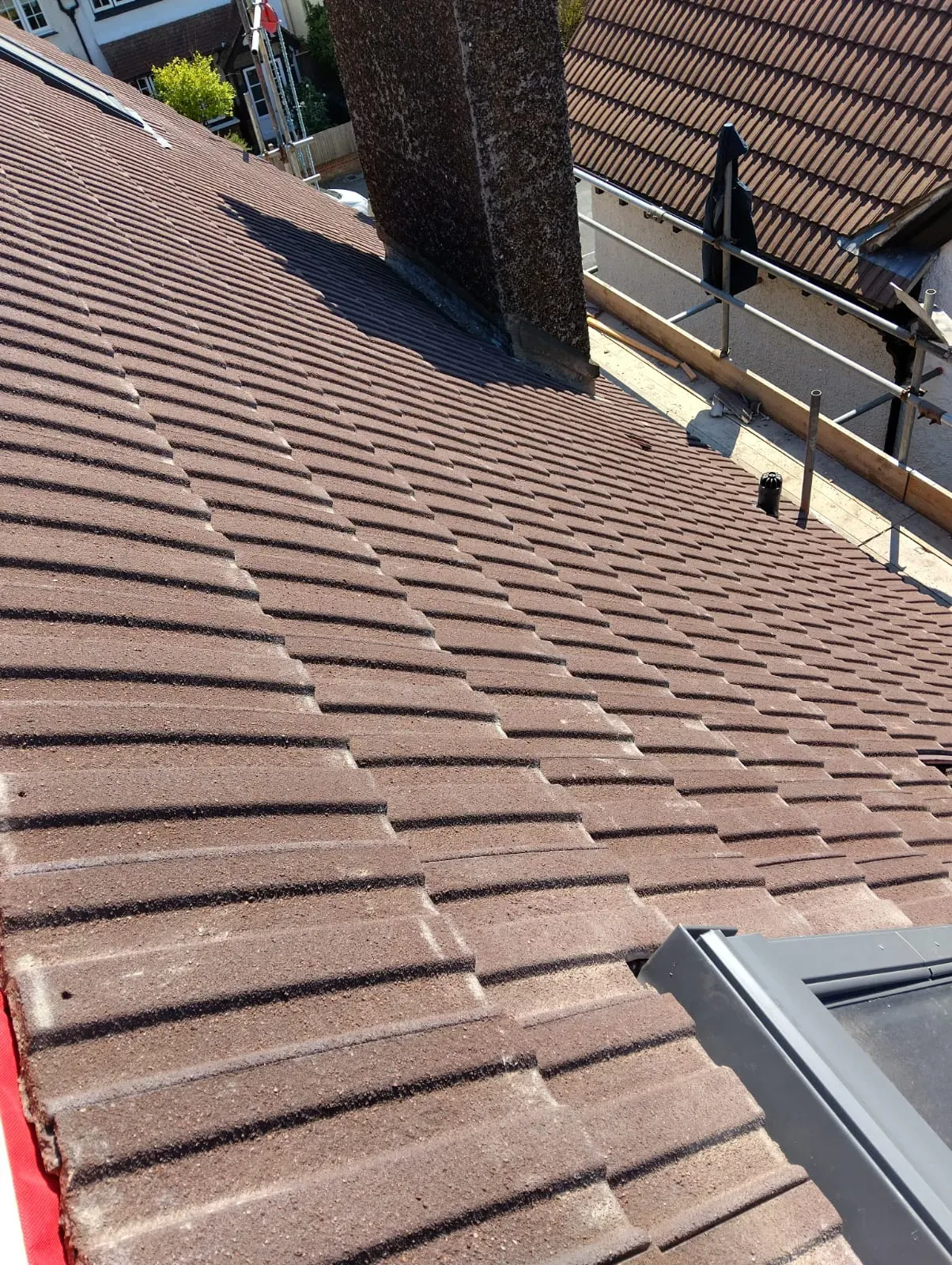
Modern Dry-Fix Systems
Each tile is mechanically screwed and clipped into the timber battens and ridge batten, flexing naturally with the roof and sealing out driving rain without cement.
How Dry Ridge and Dry Verge Systems Actually Work
A common misconception is that a dry-fix system is just a plastic cap pushed over the existing tiles. When fitted properly by a qualified roofer, the work happens underneath the tiles:
1. Dry Ridge Installation (The Roof Peak)
We start by lifting off the old ridge tiles and chiselling away all loose, crumbling mortar so the top course of roof tiles is clean. We then fix stainless steel brackets onto the top rafters and secure a new treated timber ridge batten running the length of the spine.
A flexible, ventilated roll (usually with corrugated aluminium edges and a heavy-duty butyl adhesive strip) is unrolled along the ridge and dressed tightly into the contours of your roof tiles. The ridge tiles are laid back on top with weatherproof union gaskets between each tile, and a long stainless steel screw with a clamping plate is driven straight down into the timber ridge batten.
2. Dry Verge Installation (The Gable Edges)
On the gable ends, old cement undercloaking often rots the ends of the wooden tiling battens. We strip back the edge tiles, cut back any rotten batten ends, and splice in fresh treated timber battens projecting slightly over the gable wall or bargeboard.
Individual interlocking uPVC or aluminium verge units are then slotted over the end of each tile course and nailed or screwed directly into the end of the timber batten. Each cap locks into the one below it, stopping wind from getting underneath the gable edge andpreventing mice, birds, or wasps from nesting in the roof space.
Side-by-Side Comparison: Dry-Fix vs Mortar
| Feature | Mechanical Dry-Fix System | Sand & Cement Mortar |
|---|---|---|
| Wind Uplift Resistance | Every tile is individually screwed and clamped down. Cannot blow off in gales unless the timber structure fails. | Once frost cracks the mortar bond, tiles sit loose and can slide or blow off in high winds. |
| Loft Ventilation | Built-in continuous 5mm air gap along the ridge lets warm, damp loft air escape, preventing timber rot and condensation. | Seals the ridge completely shut unless separate vented ridge tiles or tile vents are cut in. |
| Lifespan & Upkeep | 20 to 30+ years with zero maintenance. Resistant to UV rays, frost, and natural roof movement. | Typically needs patch repointing or re-bedding every 5 to 12 years depending on exposure. |
| Installation Weather | Can be installed year-round in cold or damp conditions (no wet mix to freeze or wash out). | Cannot be laid in freezing temperatures or heavy rain, as frost ruins wet cement before it cures. |
| Appearance | Clean, uniform finish available in anthracite grey, terracotta, brown, or black. | Traditional heritage look required on listed properties and certain conservation buildings. |
What Do UK Standards (BS 5534 & BS 8612) Say?
Back in 2015, the British Standard for slating and tiling (BS 5534) was updated following years of severe winter storm damage across the UK. Under current regulations, mortar alone is no longer permitted as the sole method of securing ridge, hip, or verge tiles on new roofs or full re-roofs. Even if a traditional mortar finish is used for appearance, every ridge tile must still be mechanically fixed with screws and clips underneath.
Alongside this, BS 8612 sets the strict quality standard for dry-fix roofing components. Cheap, unbranded plastic ridge rolls bought online often lose their stickiness within six months or turn brittle in the sun. At Trustmark Roofing, we only fit BS 8612 certified dry-fix kits from proven manufacturers so the roll adhesives, stainless fixings, and uPVC verge caps hold fast for decades.
When is mortar still the right choice? If you live in a listed building, a home with traditional bonnet hips, or a conservation area in places like Henley-on-Thames, Wallingford, or central Oxford, local planning officers usually insist on a traditional mortar finish to match the street scene. In those cases, we bed the tiles on a flexible lime or gauged mortar mix combined with hidden mechanical stainless steel fixings so you get both heritage appearance and modern storm security.
Can You Retrofit Dry Ridge or Verge to an Existing Roof?
Yes—you don't need to wait for a full re-roof to upgrade. In fact, retrofitting a dry ridge or dry verge system is one of the most common jobs our team carries out across Reading, Coley, Wokingham, and Oxfordshire.
If your main concrete or clay roof tiles are still in solid condition with plenty of life left in them, stripping off the failed cement along the ridge or gables and retrofitting a mechanical dry-fix kit is far more cost-effective than paying to have the same mortar repointed every few winters. In almost all cases, we reuse your existing ridge tiles once we have cleaned the old cement off the backs of them, keeping material costs down and ensuring an exact colour match to your roof.
Need an honest assessment of your ridge or gables?
We offer free roof inspections and straightforward quotes across Reading & Oxfordshire.
Common Questions Homeowners Ask Us
Can you just repoint over the top of cracked mortar?
We strongly advise against "collar pointing"—which is where someone smears a thin layer of fresh cement over the outside of old, cracked mortar. That thin skin has nothing to grip onto and usually falls off after the very first frost. To repair mortar properly, the ridge tiles must be lifted and re-bedded onto a fresh mortar bed, or upgraded to a dry ridge system.
Does installing a dry verge system require full scaffolding?
To do the job safely and properly, we erect a gable-end scaffold tower or access platform in line with HSE working-at-height regulations. It allows us to strip the verge tiles back cleanly, replace any rotten batten ends at the eaves and apex, and fix every unit straight and true without leaning dangerously off ladders.
Will a dry ridge stop condensation in my loft?
A ventilated dry ridge makes a huge difference to loft airflow. Because warm air rises to the highest point of your roof, having a continuous ventilation strip along the apex creates a natural stack effect—drawing fresh air in through your eaves soffit vents and pushing damp air out through the ridge. This helps keep loft insulation dry and prevents black mould on your roof timbers.
Do plastic dry verge caps look bulky or fade in the sun?
Older, first-generation plastic verge caps could look a bit chunky, especially on thin slate roofs. Today, we can fit slimline continuous aluminium dry verge trims for slate roofs, or UV-stabilised discreet verge units moulded to match the profile and colour of concrete and clay tiles so they blend neatly into the roofline.
Related Services & Guides
Practical homeowner advice and specialist pitched roofing services from our local team.
Pitched Roofing in Reading
Trustmark Roofing provides expert pitched roof installations and repairs in Reading. 25+ years experience. City & Guilds qualified. Get a free quote today!
Do You Need Building Regs for a New Roof?
Find out when UK Building Regulations apply to a new roof, including the 25% rule, Part L insulation upgrades, and how NFRC roofers self-certify your work.
What to Do When Your Roof Leaks in Heavy Rain
Discover safe, practical steps to contain a sudden roof leak during heavy rain, protect your electrics, and get your home ready for an emergency roofer.
Wooden Fascias: Cap Over or Full Replacement?
Should you cap over old wooden fascias with uPVC or pay for a full replacement? Learn why capping over rotting timber can damage your roof rafters.
How Long Does an EPDM Rubber Roof Last?
Find out why a seamless, single-sheet EPDM rubber roof easily lasts 40 to 50 years with hardly any maintenance compared to traditional torch-on felt.
Do You Need a Roof Survey Before Buying a House?
Standard RICS surveys often only check roofs with binoculars. Learn how a proper roofer's inspection spots hidden rot and helps you renegotiate the price.
Real Lead Flashing vs Lead-Free Alternatives
Compare traditional rolled lead sheet with synthetic lead-free flashing. Learn about lifespans, costs, and which option suits your chimney stack best.
Commercial Valley Gutter Cleaning and Lining
Learn why blocked or rusted valley gutters cause warehouse floods, and how planned silt clearance and seamless linings stop leaks.
Why Do Some Fibreglass Roofs Crack or Pinhole?
Find out why cheap GRP flat roofs blister or crack. Learn how dry OSB3 decking, expansion joints and proper resin mixing ensure a watertight finish.
Open-Cell vs Closed-Cell Spray Foam Removal
Learn the difference between soft open-cell and rigid closed-cell spray foam, and how we remove both safely without damaging your roof timbers.
Why Pressure Washing Roof Tiles Causes Leaks
Learn why jet washing roof tiles strips their protective surface, cracks mortar, and floods your loft, plus how manual scraping safely clears moss.
Roofing Scams and Doorstep Traders to Avoid
Learn how to spot common UK doorstep roofing scams. Check our homeowner guide on 14-day cooling-off periods, NFRC accreditation, and itemised quotes.
Why Chimney Back Gutters and Secret Valleys Leak
Find out why hidden chimney back gutters and secret valleys cause ceiling damp patches, even when your roof tiles look completely intact.
Ready to Upgrade Your Ridge or Gables?
Speak directly to our experienced roofers covering Reading, Oxfordshire, and the surrounding areas.