Open-Cell vs Closed-Cell Spray Foam Removal
If a mortgage surveyor has flagged spray foam in your loft, the first thing any roofer needs to know is whether it is open-cell or closed-cell. One peels away cleanly with hand tools in a couple of days; the other sets like concrete and often takes the roofing felt with it. Here is the honest breakdown of how to tell them apart and what removal actually involves.
The Short Answer: What You Are Dealing With
Feels like: A firm bath sponge or expanded bread dough. You can easily push your thumb into it and tear a chunk off by hand.
How we remove it: Hand-saws, specialist wire brushes, and flat scrapers from inside the loft.
Typical time & impact: Usually 1 to 3 days. In most cases, we can save your existing breathable felt and roof timbers without touching the tiles outside.
Feels like: Rock-hard rigid plastic. Knocking on it sounds like knocking on solid wood or plasterboard. It will not give under thumb pressure.
How we remove it: Mechanical chiselling, specialist oscillating blades, dry-ice blasting, or stripping the roof covering from the outside.
Typical time & impact: 3 to 7+ days. Because it bonds chemically to flexible felt, removing it from inside often rips the membrane, meaning a full felt and batten replacement is frequently the safest route.
How to Tell Which Foam Is in Your Loft (The Thumb Test)
Before we even bring a ladder round to inspect your loft in Reading, Oxfordshire, or the surrounding towns, you can usually figure out what type of foam you have in about ten seconds. Pop your head through the loft hatch with a torch and press your thumb firmly into an inconspicuous section of the foam between the rafters.
- If it squishes inward and springs slightly back: You have open-cell spray foam. It is usually pale yellow or off-white, has a bubbly, honeycomb texture where it has been cut back, and expands aggressively when sprayed—often puffing out to 150mm or more so it completely buries the rafters.
- If your thumb doesn't leave a dent at all: You have closed-cell spray foam. It is much denser, usually sits in a thinner layer (around 50mm to 75mm) following the shape of the rafters, and sets with a smooth, hard crust that feels like rigid surfboard foam.
Why does this matter so much to mortgage lenders and surveyors? Because both types trap moisture against the structural timber if they were sprayed directly onto old bitumastic felt or breathable membranes without an air gap. However, the way they stick to your roof structure dictates how we get them off.
How We Strip Out Open-Cell Foam Without Damaging Your Felt
Open-cell foam is by far the kinder of the two when it comes to removal. Because the cells aren't completely sealed, the foam is light, airy, and relatively weak in tension. That said, you still can't just yank at it wildly—if it was sprayed onto an older bitumen sarking felt or a thin modern breather membrane, pulling too hard can tear a hole straight through the underlay.
Step-by-Step Hand-Scraping Process
- Sheet Protection & Extraction: Removing spray foam is dusty, messy work. We lay heavy-duty dust sheets down your stairs and landing, board out temporary walkways across your ceiling joists so nobody puts a foot through your bedroom ceiling, and set up industrial H-class dust extractors. Our lads wear full-face respirators and disposable coveralls.
- Bulk Slicing: Using long, flexible insulation saws, we slice the bulk of the puffed-out foam flush with the face of the timber rafters. These big blocks drop straight into heavy-duty rubble sacks.
- Separating from the Felt: We work a blunt-edged, curved hand scraper carefully down the side of each rafter, sliding the blade between the back of the foam and the roofing felt. Because open-cell foam has some give, rolling it inward relieves the tension on the felt so it peels away in whole slabs.
- Timber Detailing & Wire Brushing: Mortgage surveyors are strict—if they see yellow foam crust left clinging to the sides of the rafters, they can still refuse to sign off the valuation. We hand-scrape and wire-brush all three exposed faces of every rafter until the bare timber grain is clearly visible for inspection.
In a standard three-bedroom semi-detached house, our team can usually strip, bag, and vacuum out open-cell foam in two to three days, leaving the roof timbers clean and ready for a surveyor's damp meter.
The Closed-Cell Problem: Hand Tools, Dry-Ice Blasting, or Re-Felting?
Closed-cell spray foam was originally designed for commercial cold stores, barn roofs, and boat hulls. It acts as an industrial glue. When sprayed onto roof timbers and flexible underlay, it bonds at a chemical level.
If you try to lever a slab of closed-cell foam off a flexible breather membrane using a crowbar or bolster chisel, one of two things happens: either the roofing felt rips to shreds, or the outer fibres of your structural timber rafters splinter away with the foam.
1. Mechanical Parers & Oscillating Multi-Tools (When Sprayed Direct to Tiles or Boards)
In older roofs with solid timber sarking boards (where there are wooden planks nailed over the rafters rather than flexible felt), we can chisel and pare the bulk of the closed-cell foam down to a thin 2mm–3mm skin using wide oscillating scraper blades and sharp wood chisels, taking care not to gouge the structural rafters.
2. How Dry-Ice Blasting Works on Stubborn Timber Residue
Where closed-cell foam leaves a rock-hard skin bonded into the rough grain of sawn rafters, heavy mechanical sanding or aggressive chiselling can chew up the wood. That is where dry-ice blasting comes in.
- Thermal Shock, Not Water: Dry-ice blasting fires tiny pellets of solid carbon dioxide (CO₂) at the timber at compressed-air speeds. Because the pellets sit at around -79°C, they instantly freeze the thin layer of polyurethane foam on contact, making it brittle so it cracks and flakes off the wood without splintering the timber beneath.
- Zero Moisture Left Behind: Unlike sandblasting or pressure washing, dry-ice pellets turn straight from a solid back into harmless gas the moment they hit the rafter. There is no wet slurry to rot your ceiling plasterboard, and only the detached foam crumbs need vacuuming up.
- The Catch with Dry-Ice Blasting: Dry-ice blasting is brilliant for cleaning rigid timber rafters or solid sarking boards, but it cannot blast closed-cell foam off flexible roofing felt. The air pressure and frozen pellets will blow straight through a flexible membrane.
3. Stripping From the Outside (Felt & Batten Replacement)
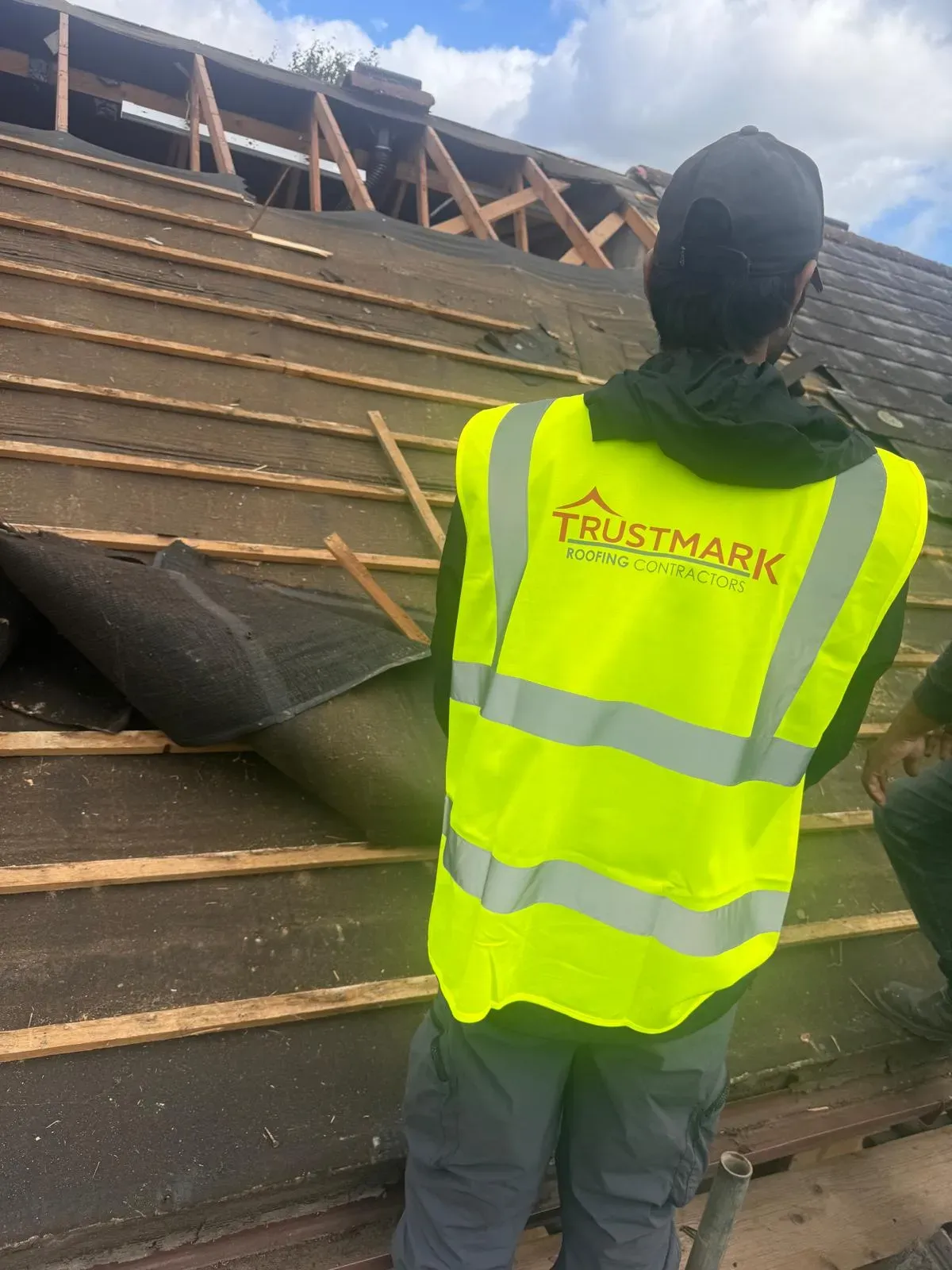
We believe in being completely honest with homeowners before quoting: if closed-cell foam has been sprayed onto flexible breathable felt or directly onto the back of your roof tiles and tile battens, nobody can remove it from inside the loft without destroying the weatherproof underlay.
In these cases, the proper, mortgage-compliant fix is to erect scaffolding, lift your existing roof tiles and stack them safely, cut out the foam-encrusted felt and battens from above, scrape and clean the tops and sides of the rafters in the open air, and then install fresh breathable membrane, new treated timber battens, and relay your original tiles.
What Happens After the Foam Is Gone? (Inspections, Insulation & Compliance)
Getting the foam out of your loft is half the job; proving to your mortgage lender or buyer's surveyor that the roof timbers are dry and structurally sound is the other half.
Once every bag of waste is cleared and the loft is vacuumed down, we inspect the exposed rafters, purlins, and ridge board for any signs of wet rot, fungal decay, or spliced timber damage. If any rafters have sweated and rotted under the foam, our carpenters can sister-bolt new structural C24 graded timbers alongside them. We also supply before-and-after photographs and formal completion documentation so your conveyancing solicitor or mortgage valuer can see the clean, bare rafters clearly.
Finally, because removing spray foam strips away your roof's thermal barrier, we recommend laying traditional, breathable mineral wool insulation across the ceiling joists to a depth of 270mm. This keeps the warmth in your living spaces while leaving the pitched rafters above completely clear and ventilated—exactly how UK mortgage lenders and Building Regulations (Approved Document L) expect a cold-pitched loft to work. If closed-cell foam requires lifting more than 25% of your external roof covering to replace the felt and battens, this triggers Building Control sign-off, which we handle directly as an NFRC-registered contractor.
Side-by-Side Comparison: Open-Cell vs Closed-Cell Removal
Here is what changes on the job depending on which material was sprayed into your roof space.
| Feature / Factor | Open-Cell Spray Foam | Closed-Cell Spray Foam |
|---|---|---|
| Physical Texture | Soft, spongy, compresses under finger pressure | Rock-hard, rigid, dense plastic shell |
| Primary Removal Method | Internal hand-slicing, blunt felt scrapers & wire brushes | Mechanical chisels, dry-ice blasting, or external roof strip & re-felt |
| Can Existing Felt Be Saved? | Usually yes, unless the old felt was already perished before spraying | Rarely—it glues permanently to flexible felt and tears it during removal |
| Risk of Timber Splintering | Very low when hand-scraped carefully | High if pried off roughly; requires careful paring or dry-ice cleaning |
| Typical Time on Site | 1 to 3 days (internal access only) | 3 to 7+ days (longer if scaffolding & re-felting required) |
Common Questions Homeowners Ask Us About Spray Foam
Can I scrape spray foam off the rafters myself?
While open-cell foam looks easy to pull off in big handfuls, two things usually catch DIYers out: first, it is surprisingly easy to put a scraper blade straight through your roofing felt (causing leaks the next time it rains), and second, mortgage surveyors will reject a half-scraped loft. Every trace of foam crust on the sides of the rafters and up in the tight eaves has to be brushed clean, and you will end up with 40 to 60 jumbo bags of trade waste that normal council tips often refuse.
Does dry-ice blasting damage old roof timbers?
No, when set to the right pressure for timber, dry-ice blasting is much gentler on rafters than metal chisels or heavy rotary sanders. Because it uses thermal shock (-79°C) to freeze and crack the brittle foam layer rather than grinding away at the wood fibres, the structural timber stays intact and completely dry.
What if the foam was sprayed directly onto the back of my tiles?
In older properties built before the 1960s that had no underlay felt at all, installers sometimes sprayed foam straight onto the back of the clay or concrete tiles and wooden battens. If it is closed-cell foam, it locks the tiles together like cement. In this situation, the roof covering has to be stripped from the outside, the rafters cleaned down, and new felt, battens, and tiles installed.
Will my house pass a mortgage survey once the foam is removed?
Yes, provided the rafters are stripped back to bare, inspectable wood so the surveyor can check the timber with a moisture meter and see that no rot is hidden. If we find any damp or decayed timber once the foam comes off, we can repair or replace those rafters straight away so the surveyor has nothing to flag.
Related Services & Guides
Professional Spray Foam Removal in Reading & Oxfordshire
Ready to get spray foam out of your loft for a property sale, remortgage, or equity release? Find out how our Tadley, Reading, and Oxfordshire team handles full removal, waste disposal, and replacement loft insulation.
Spray Foam Removal in Reading
Safe and professional spray foam removal in Reading. Restore your mortgage eligibility and protect your roof. 25+ years experience. Get a free quote today.
Do You Need Building Regs for a New Roof?
Find out when UK Building Regulations apply to a new roof, including the 25% rule, Part L insulation upgrades, and how NFRC roofers self-certify your work.
What to Do When Your Roof Leaks in Heavy Rain
Discover safe, practical steps to contain a sudden roof leak during heavy rain, protect your electrics, and get your home ready for an emergency roofer.
Wooden Fascias: Cap Over or Full Replacement?
Should you cap over old wooden fascias with uPVC or pay for a full replacement? Learn why capping over rotting timber can damage your roof rafters.
How Long Does an EPDM Rubber Roof Last?
Find out why a seamless, single-sheet EPDM rubber roof easily lasts 40 to 50 years with hardly any maintenance compared to traditional torch-on felt.
Do You Need a Roof Survey Before Buying a House?
Standard RICS surveys often only check roofs with binoculars. Learn how a proper roofer's inspection spots hidden rot and helps you renegotiate the price.
Dry Ridge and Verge Systems vs Mortar Bedding
Compare dry-fix ridge and verge systems with traditional mortar bedding. Learn about BS 8612 standards, loft ventilation, and stopping wind uplift.
Real Lead Flashing vs Lead-Free Alternatives
Compare traditional rolled lead sheet with synthetic lead-free flashing. Learn about lifespans, costs, and which option suits your chimney stack best.
Commercial Valley Gutter Cleaning and Lining
Learn why blocked or rusted valley gutters cause warehouse floods, and how planned silt clearance and seamless linings stop leaks.
Why Do Some Fibreglass Roofs Crack or Pinhole?
Find out why cheap GRP flat roofs blister or crack. Learn how dry OSB3 decking, expansion joints and proper resin mixing ensure a watertight finish.
Why Pressure Washing Roof Tiles Causes Leaks
Learn why jet washing roof tiles strips their protective surface, cracks mortar, and floods your loft, plus how manual scraping safely clears moss.
Roofing Scams and Doorstep Traders to Avoid
Learn how to spot common UK doorstep roofing scams. Check our homeowner guide on 14-day cooling-off periods, NFRC accreditation, and itemised quotes.
Why Chimney Back Gutters and Secret Valleys Leak
Find out why hidden chimney back gutters and secret valleys cause ceiling damp patches, even when your roof tiles look completely intact.
Book Your Free Loft & Spray Foam Check Today
Whether you have soft open-cell foam or rock-hard closed-cell insulation holding up a house sale, our family-run roofing team is here to give you honest advice and a clear, fixed quote.